For office workers, snacking is often less about hunger and more about convenience. Long meetings, tight deadlines, and hours in front of a computer can make it tempting to reach for biscuits, chips, sugary drinks, or other highly processed foods. While these options may provide a quick energy boost, they may not keep you satisfied for long. Choosing nutritious snacks can support steady energy, help manage hunger between meals, and make a workday feel more balanced.
Among the many healthy snack options available, makhana, also known as fox nuts or lotus seeds, is a particularly convenient choice. Light, crunchy, versatile, and easy to store, makhana can fit naturally into an office snacking routine.
Why Healthy Office Snacking Matters
A typical workday can involve several hours between breakfast and lunch or lunch and dinner. Going too long without eating may leave you extremely hungry, making it harder to make mindful food choices later. On the other hand, frequently consuming snacks high in added sugar, refined carbohydrates, or excessive salt can contribute unnecessary calories to your daily diet.
A better approach is to choose snacks that offer a combination of satiety, nutrition, and convenience. Ideally, an office snack should be easy to carry, require little preparation, and be enjoyable enough to replace less nutritious alternatives.
This is where makhana can be useful.
What Is Makhana?
Makhana is the edible seed of the prickly water lily, traditionally consumed in parts of India and other Asian countries. It is commonly roasted and seasoned before being eaten as a snack.
Roasted makhana has a distinctive crunchy texture and a mild flavor. Because of its relatively neutral taste, it can be prepared in many ways—from lightly salted and spiced to sweeter versions. This versatility makes it suitable for different preferences while keeping snacking interesting.
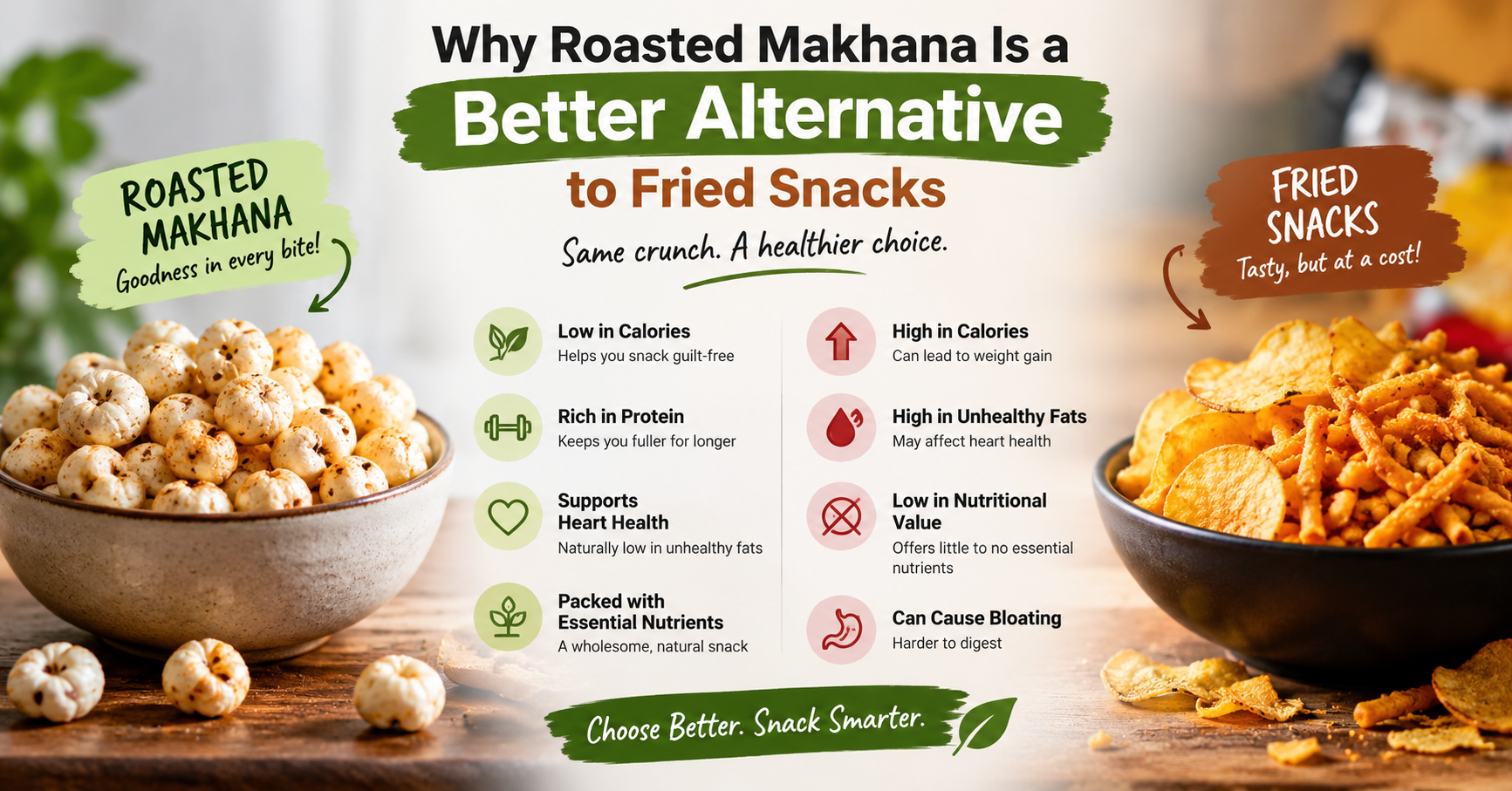
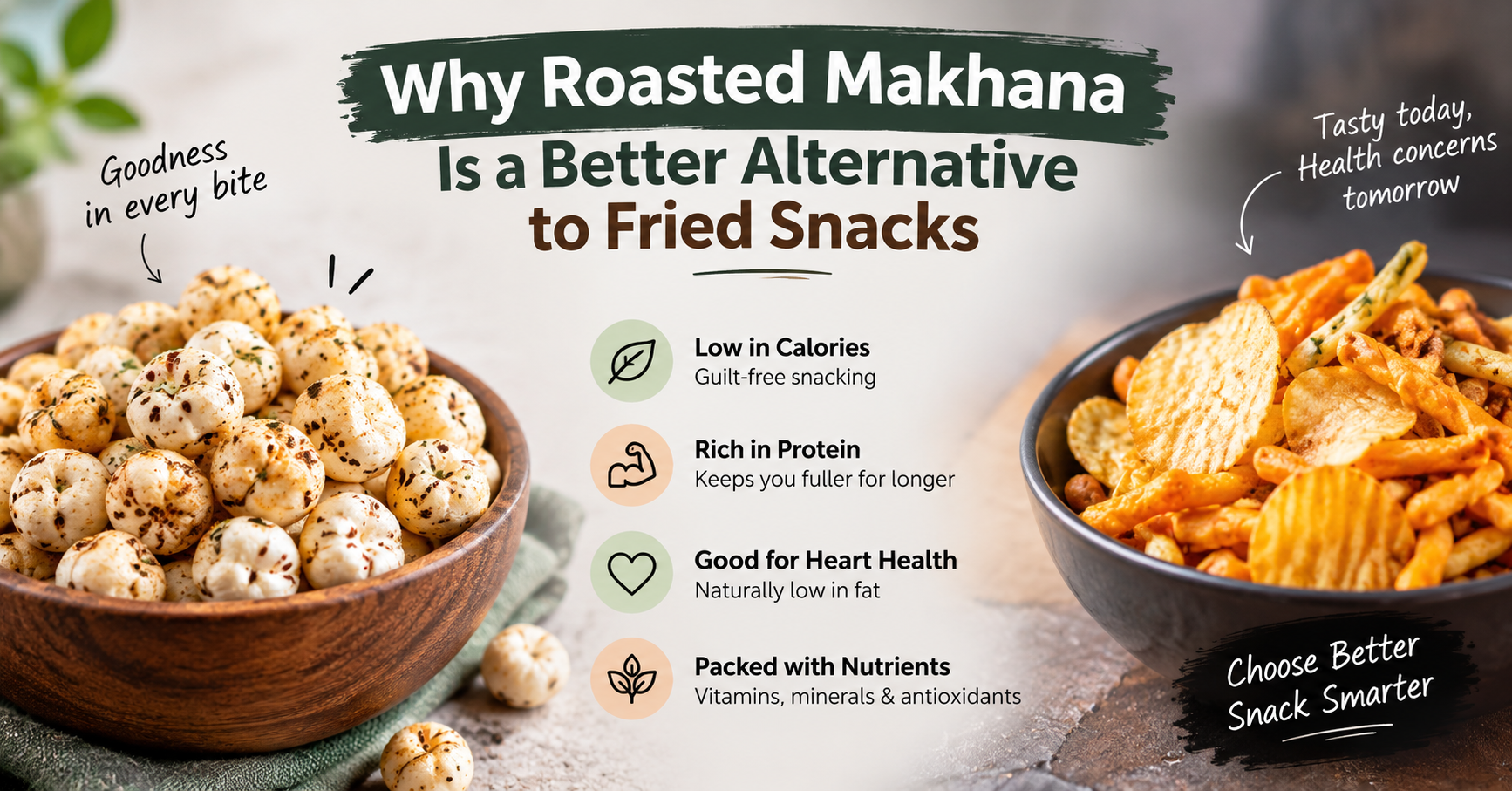
1. A Convenient Alternative to Fried Snacks
Office snack drawers often contain chips, namkeen, cookies, and other packaged foods. These can be convenient, but many varieties are high in sodium, added sugars, refined carbohydrates, or fats depending on how they are prepared.
Plain or lightly seasoned roasted makhana can provide a crunchy alternative. When prepared with a modest amount of oil and seasoning, it can be incorporated into a balanced eating pattern without requiring complicated preparation.
For busy professionals, convenience is important. A container of roasted makhana can be kept at a desk or packed in a lunch bag, making it easy to choose when hunger strikes.
2. It Can Help Make Snacking More Satisfying
One of the biggest challenges with office snacking is eating something small and then feeling hungry again soon afterward. Makhana contains carbohydrates and some protein and is relatively light, so it can be used as part of a satisfying snack.
For greater staying power, pair makhana with another nutritious food. For example, you could combine it with a small portion of nuts and seeds, fresh fruit, or unsweetened yogurt. Combining different food groups can make a snack more balanced and satisfying.
3. It Offers Useful Nutrients
Makhana provides several nutrients, including carbohydrates, protein, and minerals such as magnesium and phosphorus. Its nutritional profile makes it more than simply a crunchy snack.
However, it is important not to treat any single food as a complete source of nutrition. A healthy diet depends on overall dietary variety. Makhana works best as one component of a broader eating pattern that includes vegetables, fruits, whole grains, pulses, dairy or alternatives, nuts, seeds, and other nutritious foods.
4. Easy to Customize
Another advantage of makhana is its versatility. Instead of relying on heavily flavored commercial snacks, you can roast makhana at home and customize the seasoning.
For a savory version, try a small amount of cumin, black pepper, turmeric, or chili powder. For a simple option, a light sprinkle of salt may be enough. You can also experiment with herbs and spices according to your taste.
The key is moderation. Large amounts of butter, oil, sugar, or salt can change the nutritional profile of an otherwise simple snack.
5. Suitable for Different Office Situations
Makhana can work in several workplace situations. You can keep a small portion at your desk for an afternoon snack, carry it during a commute, or serve it during an informal office gathering.
Because roasted makhana is relatively dry and does not require refrigeration, it is particularly practical for people who do not have regular access to a refrigerator or kitchen at work.
How Much Should You Eat?
Portion size still matters. Even nutritious foods can contribute substantial calories when eaten in large quantities. Instead of eating directly from a large packet, measure a reasonable portion into a small container before taking it to the office.
It is also worth paying attention to hunger cues. Snack when you are genuinely hungry rather than automatically eating simply because food is available nearby.
Other Healthy Office Snack Ideas
Makhana does not have to be your only option. Rotating different snacks can help provide greater dietary variety. Other practical choices include fresh fruit, roasted chickpeas, unsweetened yogurt, nuts and seeds, vegetable sticks with hummus, whole-grain crackers, and homemade trail mixes.
The best office snack is ultimately one that fits your nutritional needs, schedule, preferences, and overall diet.
Healthy snacking can make a meaningful difference to the way office workers manage food during busy days. Instead of relying on sugary or heavily processed snacks, choosing convenient whole or minimally processed foods can make everyday eating more nutritious.
Makhana stands out as a smart office snack because it is crunchy, versatile, easy to store, and simple to prepare. When roasted with moderate amounts of oil, salt, and seasoning, it can be a practical alternative to many conventional snack foods.
Whether enjoyed on its own or paired with fruit, nuts, yogurt, or another nutritious food, makhana can earn a useful place in a balanced office-snacking routine. The goal is not to find one “perfect” snack, but to build consistent eating habits that support energy, satisfaction, and overall well-being throughout the working day.