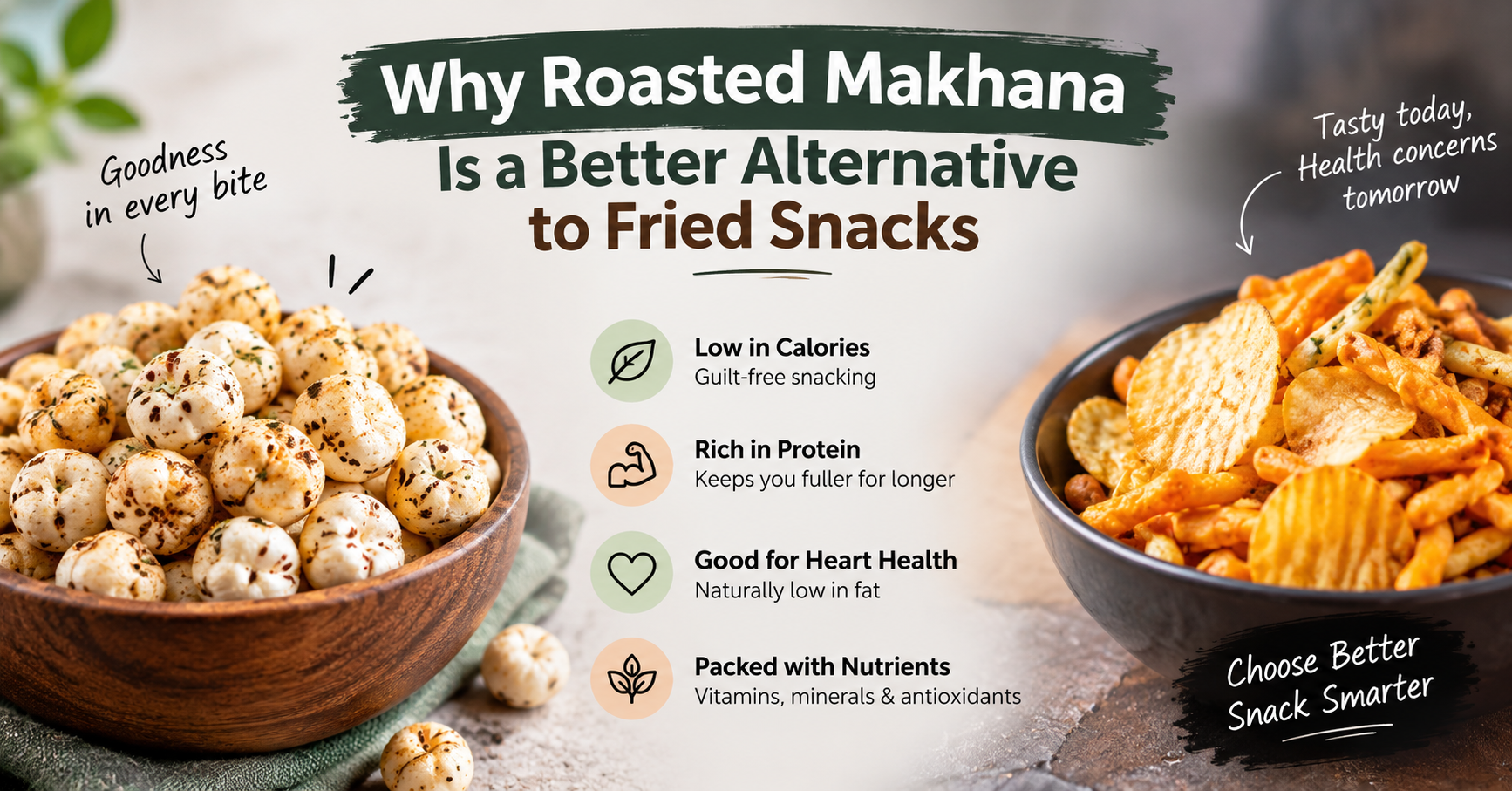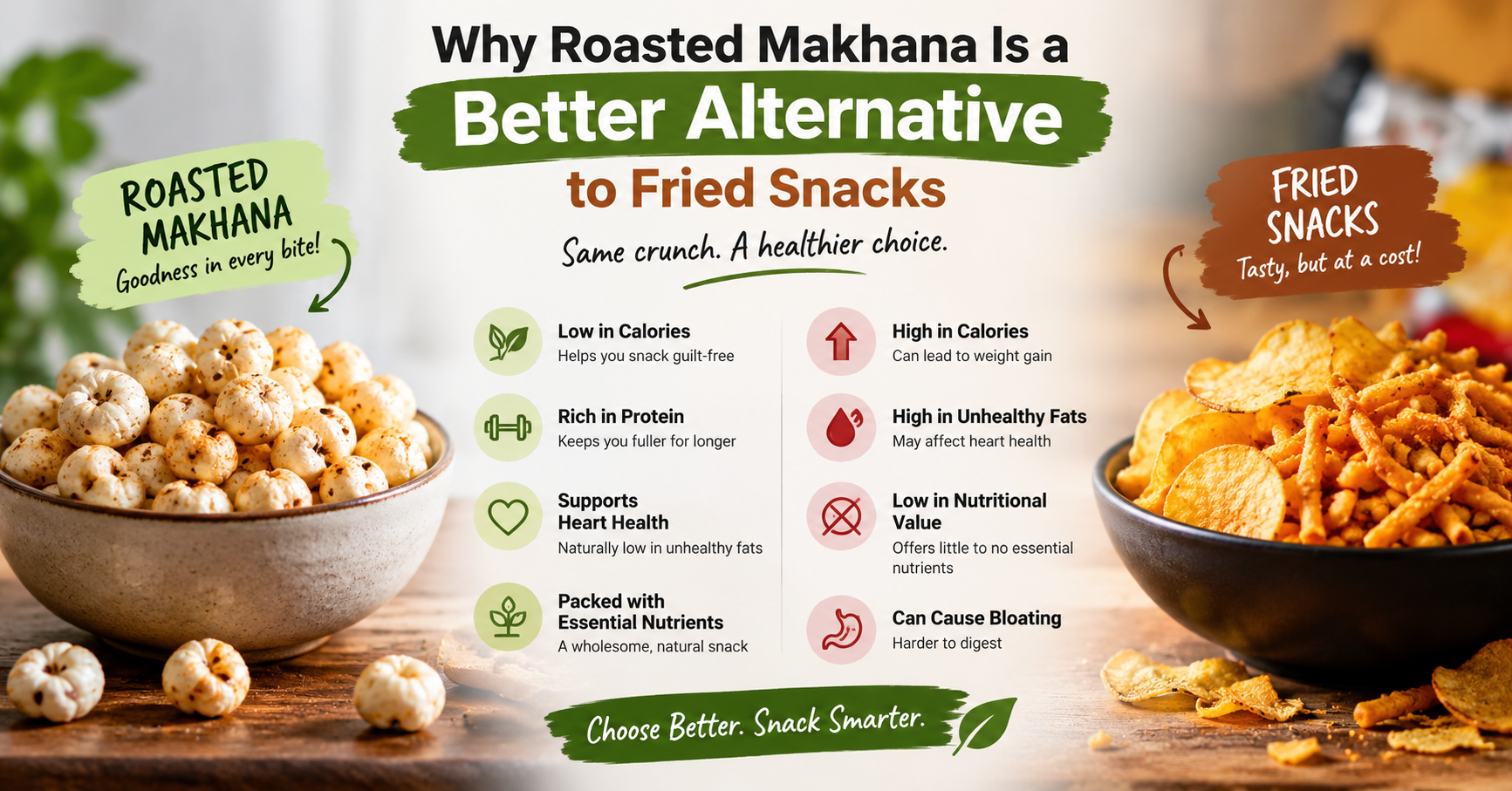
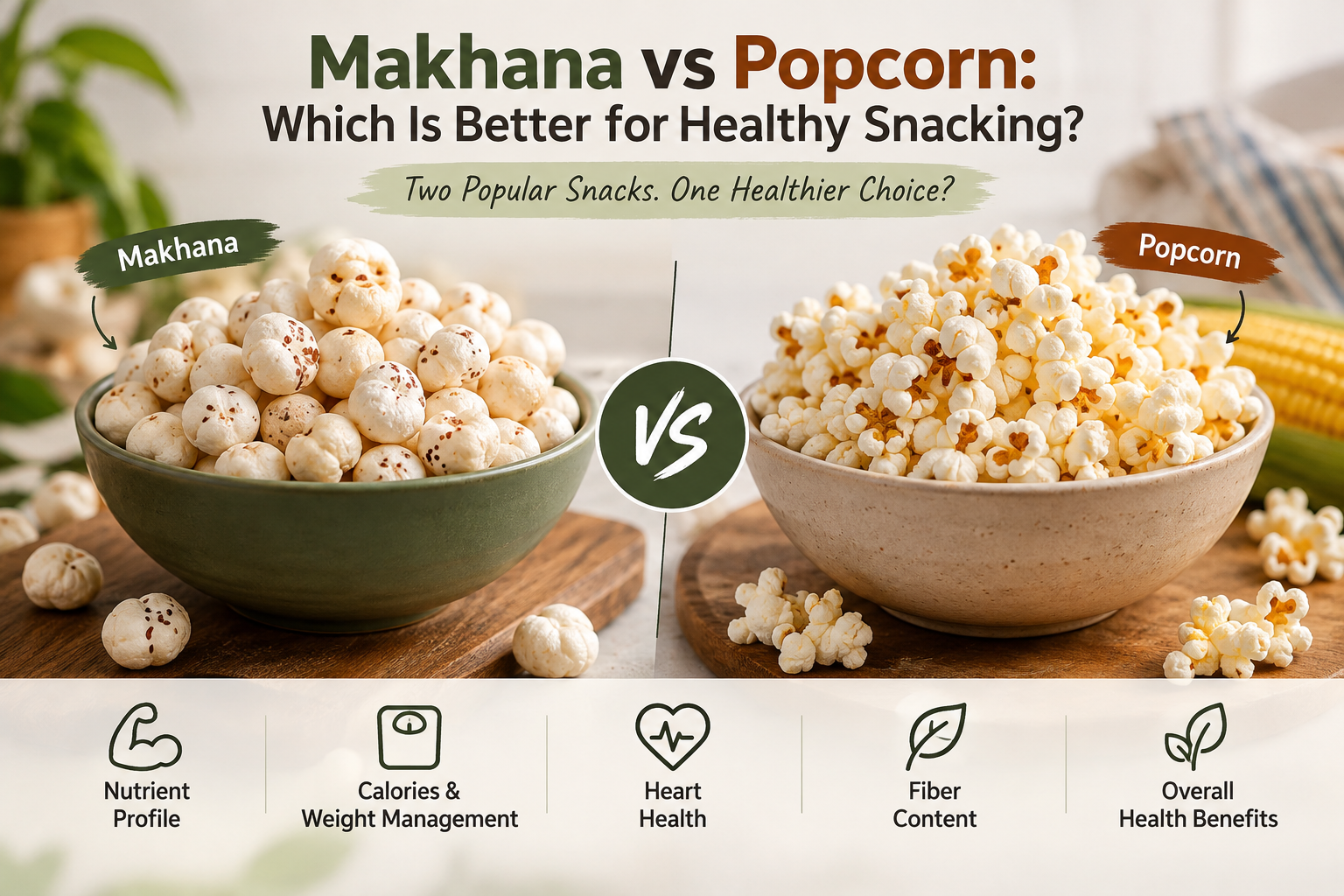
Snacking is a normal part of our daily routine, but the choice of snack can make a big difference to overall eating habits. Among popular light snacks, makhana and popcorn are both often considered healthier alternatives to chips, fried namkeen, and other processed foods. But which one is actually better for healthy snacking?
Makhana, also known as fox nuts or lotus seeds, has become popular because of its light texture, minerals, protein, and fibre. Popcorn, especially air-popped popcorn, is also a whole-grain snack that can provide fibre while keeping calories moderate. However, the way these snacks are prepared matters a lot.
What Is Makhana?
Makhana is the seed of the water lily plant and is commonly roasted before eating. It has a naturally mild taste, so it can be prepared with simple spices such as black pepper, cumin, turmeric, or a small amount of salt.
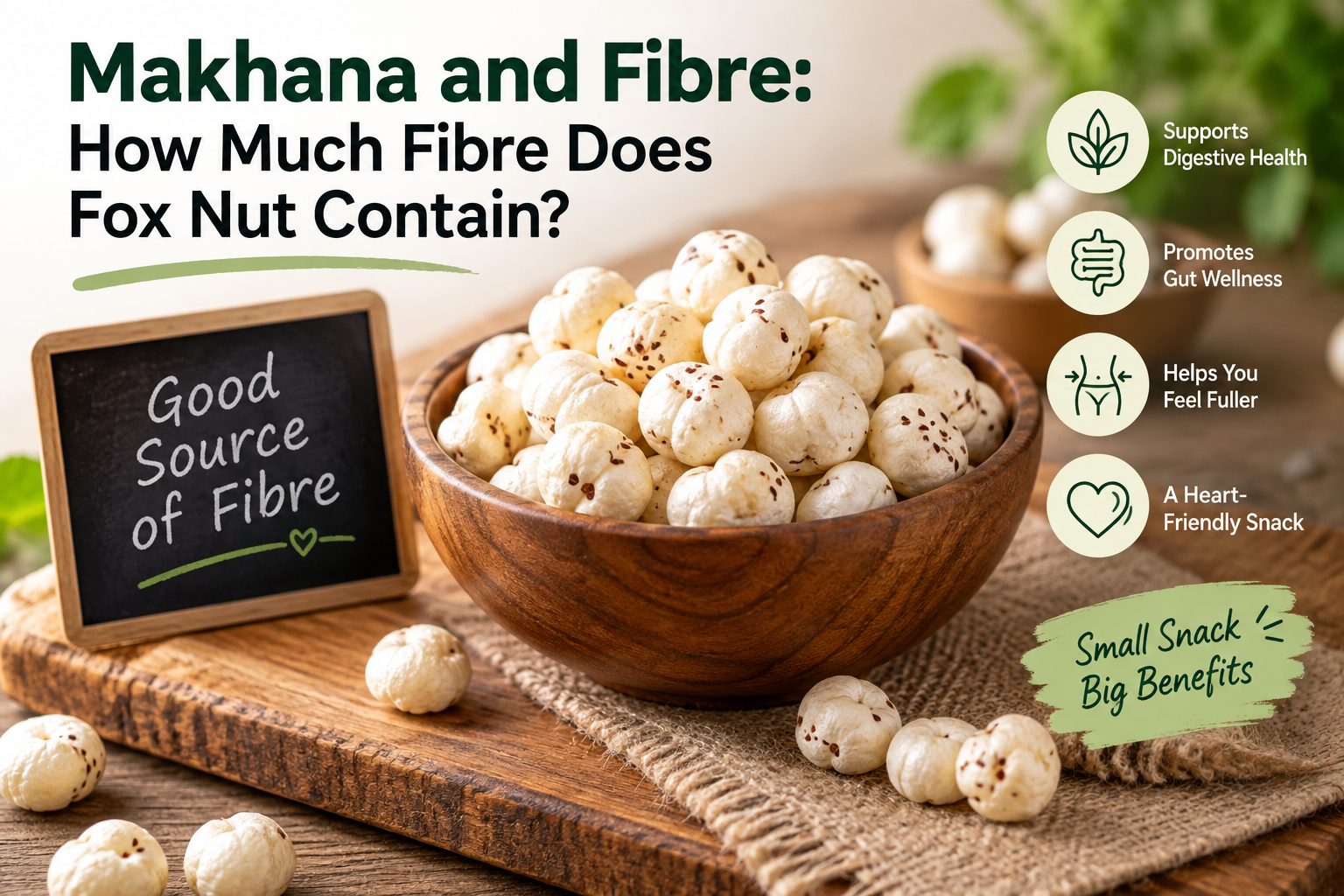
Makhana is popular among people looking for a light evening snack. It contains carbohydrates, some protein, and fibre, while naturally having very little fat. A 100-gram serving of makhana can provide roughly 350–370 calories, 9–10 grams of protein, and 12–14 grams of fibre, although nutrition varies by product and preparation.
What Makes Popcorn a Healthy Snack?
Popcorn is made from a whole grain. When it is air-popped without excessive butter, oil, sugar, or salt, it can be a filling snack with useful dietary fibre.
One advantage of popcorn is its volume. A relatively small amount of kernels can turn into a large bowl of popcorn, which may help people feel like they are eating a substantial portion.
However, not every popcorn is equally healthy. Movie-theatre popcorn, caramel popcorn, cheese-flavoured popcorn, and heavily buttered versions can contain considerably more calories, sodium, sugar, or fat.
Makhana vs Popcorn: Nutrition Comparison
Both snacks can fit into a balanced diet, but they have different nutritional strengths.
Makhana provides a combination of carbohydrates, plant protein, and fibre. It is also naturally low in fat before cooking. Popcorn, meanwhile, is particularly useful as a whole-grain source of fibre.
For someone looking for higher-volume snacking, air-popped popcorn may be attractive. For someone who wants a crunchy snack with a different texture and a convenient Indian-style seasoning, roasted makhana can be a good option.
The important point is portion size. Adding large amounts of ghee, butter, oil, cheese powder, sugar, or other toppings can quickly change the nutritional profile of either snack.
Which Is Better for Weight Management?
Neither makhana nor popcorn should automatically be called a weight-loss food. Weight management depends on total calorie intake, meal patterns, physical activity, and portion control.
Air-popped popcorn can be filling because it has a high volume for its calories. Makhana can also work well as a controlled portion snack, especially when roasted with minimal oil.
Instead of asking which snack is universally better, consider how much you eat and how it is prepared.
Which Is Better for Evening Snacking?
Both can work well in the evening.
Roasted makhana is convenient because it can be prepared in advance and stored in an airtight container. You can season it with simple spices for flavour without depending on heavy sauces.
Air-popped popcorn is another easy option. It can be prepared quickly and paired with herbs or mild spices.
If you frequently crave salty packaged snacks, keeping homemade roasted makhana or lightly seasoned popcorn available may make it easier to choose a better option.
Makhana vs Popcorn: What About Fibre?
Fibre is important for digestion and can contribute to feelings of fullness. Popcorn is naturally a whole grain and can be a useful source of dietary fibre.
Makhana also contains fibre, with the exact amount depending on the product and serving size. This makes both options preferable to many highly processed snacks that offer little nutritional value.
Still, snacks should not be the only source of fibre. Vegetables, fruits, whole grains, pulses, nuts, and seeds should also be part of a balanced diet.
Which One Should You Choose?
The better choice depends on your personal preference and preparation method.
Choose makhana if:
- You enjoy a light, crunchy Indian snack.
- You want to experiment with different spices.
- You prefer a snack that can be roasted and stored.
- You want an alternative to fried namkeen.
Choose popcorn if:
- You want a whole-grain snack.
- You enjoy a large-volume snack.
- You prefer air-popped foods.
- You want a quick snack with minimal preparation.
How to Make Either Snack Healthier
The simplest rule is keep the ingredients simple. Roast makhana using little oil or ghee and season it with spices. For popcorn, choose air-popped or lightly cooked popcorn instead of heavily buttered or caramel-coated varieties.
Avoid turning a healthy base into a calorie-heavy snack through excessive toppings. Portion the snack into a bowl rather than repeatedly eating directly from a large container.
So, makhana vs popcorn— which is better for healthy snacking? There is no single winner for everyone.
Makhana is a nutritious and versatile snack that fits well into Indian eating habits, while air-popped popcorn offers the benefits of a whole grain and can provide good volume and fibre. Both can be healthy choices when prepared with limited oil, butter, sugar, and salt.
The real difference comes down to preparation, portion size, and overall diet. Instead of completely avoiding snacks, choose simple ingredients and make your everyday snacking more balanced.