The demand for healthy snacks is growing in India, and makhana has become one of the popular choices among health-conscious consumers. People now prefer snacks that are light, crunchy and easy to include in their daily diet. This growing interest has created new opportunities for entrepreneurs who want to enter the food processing industry.
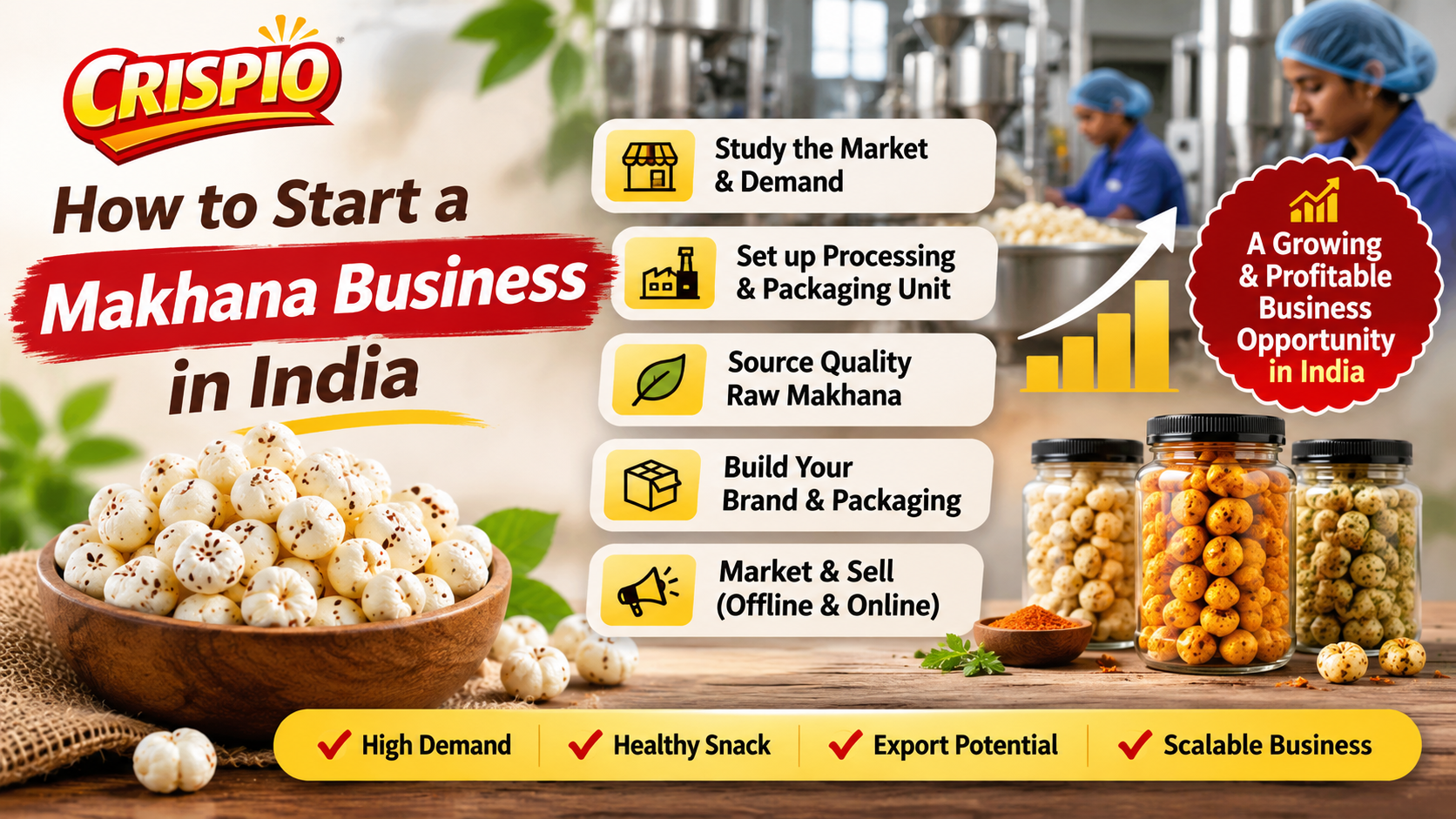
Starting a makhana business in India can be a good business opportunity if you understand sourcing, processing, packaging and marketing. You can start with a small investment by purchasing raw or popped makhana from suppliers and selling it under your own brand. Later, you can expand into flavoured makhana, wholesale distribution or large-scale manufacturing.
If you are wondering how to start a fox nut business, this guide explains the important steps, investment requirements, machinery, licences and profit opportunities.
1. Understand the Makhana Market in India
Before starting any business, you should understand the market and customer demand. Makhana, also known as fox nuts or lotus seeds in common market terminology, is mainly produced in Bihar and other parts of eastern India.
Bihar is India's leading makhana-producing state. According to government estimates, its production reached around 60,000 metric tonnes in 2025–26. The growing demand for packaged snacks, premium food products and value-added makhana has created opportunities for small businesses and established brands.
You can target different customer groups, including:
-
Health-conscious consumers
-
Gym and fitness enthusiasts
-
Families looking for everyday snacks
-
Retail grocery stores and supermarkets
-
Online grocery customers
-
Corporate gifting businesses
-
Restaurants and food manufacturers
Understanding your target customers will help you decide which products to sell and how to price them.
2. Choose the Right Makhana Business Model
One of the first steps in your makhana business plan is selecting the business model. You do not need to start a large manufacturing unit immediately.
Makhana Trading Business
In this model, you purchase raw or popped makhana from farmers, wholesalers or local suppliers and sell it to retailers, distributors and other businesses. It requires less machinery and allows you to start with a smaller setup.
Makhana Processing Business
You purchase raw makhana seeds and process them into finished products. Activities may include cleaning, roasting, popping, grading and polishing. This model requires trained workers, suitable equipment and quality control.
Makhana Packaging Business
You purchase ready-to-sell popped makhana in bulk, sort it, pack it into attractive packets and sell it under your own brand. You can start with plain makhana and gradually introduce different flavours.
Makhana Manufacturing Business
This model involves larger-scale operations, including processing, flavouring, packaging and distribution. You can manufacture roasted makhana, flavoured snacks, makhana powder and other value-added products.
3. Prepare a Makhana Business Plan
A proper business plan helps you manage expenses and avoid unnecessary losses. Before investing money, prepare a basic plan covering the following points:
-
Business name and brand identity
-
Target customers and selling locations
-
Raw material suppliers
-
Product categories and packet sizes
-
Machinery and equipment requirements
-
Packaging and transportation expenses
-
Marketing and distribution strategy
-
Expected sales and working capital
Start with a limited product range instead of launching too many flavours. This will help you understand customer preferences and manage your inventory.
4. Arrange Raw Makhana from Reliable Suppliers
Raw material quality plays an important role in the success of your business. You should purchase makhana from reliable farmers, local traders or wholesale suppliers.
Bihar is an important sourcing destination, particularly Madhubani, Darbhanga, Purnia, Katihar, Saharsa and Supaul.
Before purchasing in bulk, check:
-
Size and grading of makhana
-
Colour, freshness and crunchiness
-
Moisture content
-
Broken and damaged pieces
-
Supplier consistency
-
Wholesale purchase price
Always purchase sample quantities before finalising a supplier. Good-quality raw material helps maintain product taste and customer satisfaction.
5. Understand Makhana Processing and Machinery
If you want to start a makhana manufacturing business, you need to understand the processing stages.
The general makhana processing procedure includes:
-
Cleaning: Remove dust, unwanted particles and impurities.
-
Drying: Reduce moisture to prepare seeds for further processing.
-
Roasting: Apply controlled heat to prepare seeds for popping.
-
Popping: Use traditional or suitable machinery to produce expanded makhana.
-
Grading: Separate makhana according to size and quality.
-
Roasting and flavouring: Prepare ready-to-eat products with different seasonings.
-
Packaging: Pack the finished products in food-grade packaging.
Depending on your business model, you may need cleaning machines, seed graders, roasting equipment, popping machines, weighing machines and sealing machines.
You can also explore small and medium-level processing unit models available through the Bihar government's National Makhana Board portal.
6. Makhana Business Investment in India
The makhana business investment depends on your production capacity, location, machinery and business model.
Here is an illustrative planning estimate, not a verified market quotation.
|
Business model |
Approximate initial budget |
|---|---|
|
Small trading business |
₹50,000–₹2 lakh |
|
Small packaging business |
₹1–3 lakh |
|
Small roasting business |
₹2–5 lakh |
|
Processing and manufacturing unit |
₹5–15 lakh or more |
Your investment should cover raw materials, machinery, packaging, rent, labour, transportation, licences and marketing.
Start with a small setup if you have limited capital. Once you understand customer demand, you can increase your production capacity.
7. What Is the Makhana Business Profit Margin?
The makhana business profit margin depends on purchasing costs, product quality, packaging, distribution and selling prices.
For example, flavoured and branded makhana may offer better value addition than selling unprocessed products in bulk. However, higher selling prices do not automatically mean higher profits.
Calculate all expenses, including:
-
Raw makhana purchase
-
Processing and flavouring
-
Packaging material
-
Labour and electricity
-
Transportation
-
Distributor and retailer commissions
-
Online marketplace charges
-
Marketing and advertising
Calculate your actual gross margin and net profit separately. This will help you understand whether your business is financially sustainable.
8. Start Makhana Packaging and Branding
Packaging is one of the most important parts of a successful food business. Customers usually prefer products that look clean, attractive and trustworthy.
You can introduce different packaging sizes, such as 50g, 100g, 200g and 500g.
Popular product varieties include:
-
Plain roasted makhana
-
Peri-peri makhana
-
Cheese-flavoured makhana
-
Pudina makhana
-
Himalayan salt and pepper makhana
-
Masala makhana
Use moisture-resistant, food-grade packaging to maintain freshness and crunchiness.
You can also study established brands like Crispio to understand how makhana sourcing, processing, flavour development and branding can create value in the market.
9. Get Required Licences and Registrations
Before selling food products commercially, complete the necessary business registrations.
Important requirements may include:
-
FSSAI registration or licence
-
GST registration, where applicable
-
Business registration
-
Trade licence, where applicable
-
Trademark registration for your brand
-
Legal Metrology compliance for packaged products
FSSAI registration or licensing is mandatory for food business operators. The applicable category depends on your business activity and eligibility. You must also follow food hygiene and packaging requirements.
You can apply through the official FSSAI FoSCoS portal.
10. Sell Your Makhana Products Online and Offline
Once your products are ready, focus on building a strong distribution network.
You can sell through:
-
Local grocery stores and supermarkets
-
Wholesale markets
-
Amazon and Flipkart
-
Your own ecommerce website
-
Social media platforms
-
Corporate gifting suppliers
-
Restaurants and health food stores
Start with your local market and collect customer feedback. Offer sample packs, introductory discounts and combo offers to attract buyers.
11. Explore Government Schemes for Makhana Businesses
Entrepreneurs should also check government support available for the makhana sector.
The National Makhana Board and the Central Sector Scheme for Development of Makhana focus on production, processing, value addition, marketing and export promotion. Bihar also provides information about processing-unit models and scheme applications through its horticulture department.
Check the latest eligibility, application conditions and available financial assistance before including any subsidy in your business budget.
Starting a makhana business in India can be a promising opportunity for entrepreneurs who understand product quality, sourcing and customer demand. You can begin with a small trading or packaging setup and gradually move towards processing, manufacturing and branded snack production.
The most important thing is to maintain quality, choose reliable suppliers and build customer trust. Do proper market research before investing a large amount.
With the right business plan, attractive packaging and effective marketing, you can build a sustainable makhana business in India.