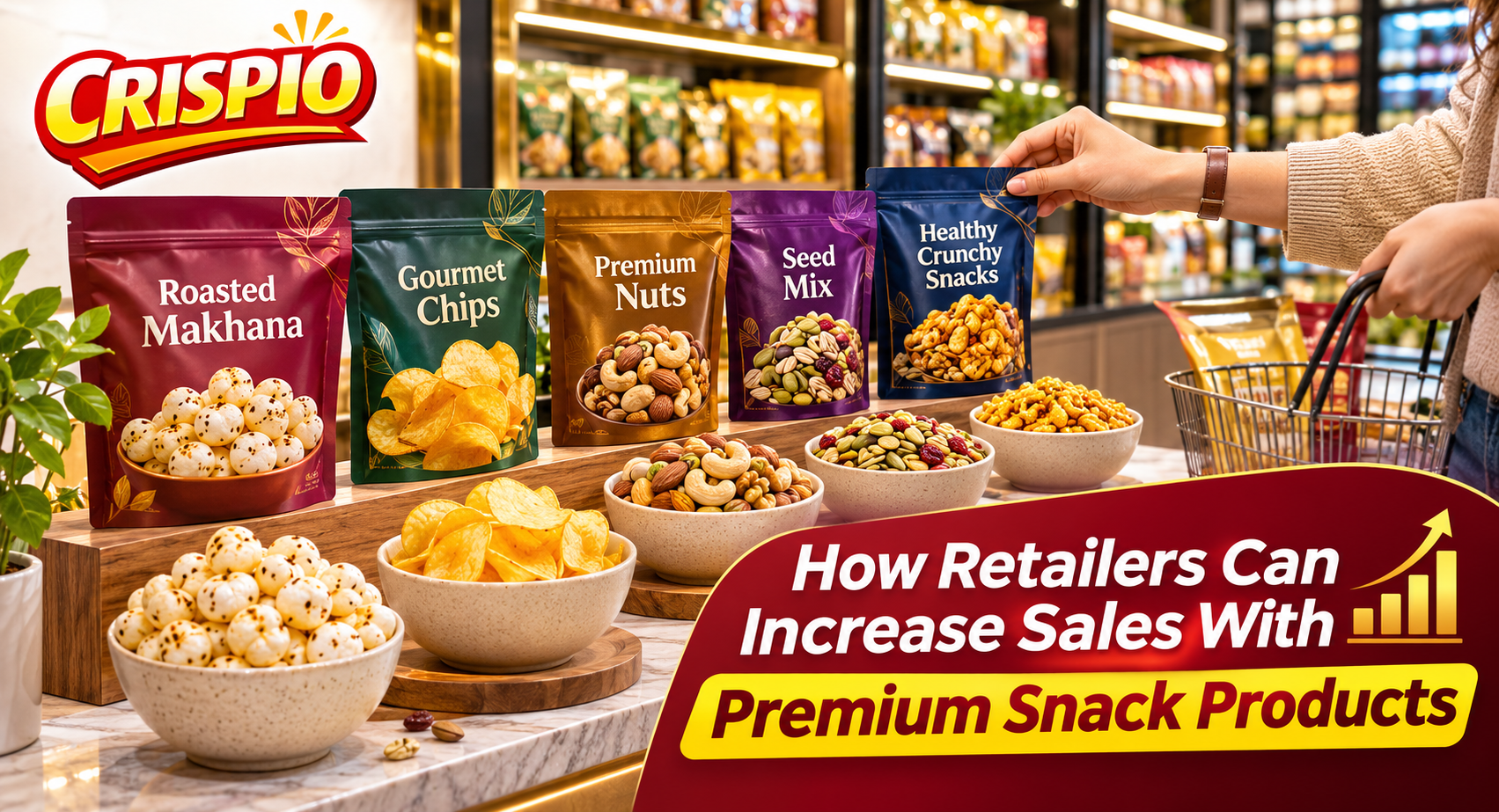
The retail snack market in India is growing as customers look for tasty, convenient and better-quality food options. From roasted makhana and healthy namkeen to flavoured nuts, millet snacks and premium packaged snacks, consumers now have more choices than traditional biscuits and chips. This creates a good opportunity for retailers to increase their sales by adding premium snack products to their stores.
However, simply stocking expensive snacks does not guarantee better sales. Retailers need to understand customer preferences, select the right products, maintain attractive displays and offer competitive prices. With the right approach, premium snacks can help retailers attract new customers, increase average order value and improve profit margins.
Let's understand how retailers can increase snack sales and build a profitable snack business.
1. Understand Changing Customer Preferences
Customer preferences are changing, especially among young consumers, working professionals and health-conscious families. Many people now look for snacks that offer better ingredients, interesting flavours and convenient packaging.
Retailers should consider stocking products such as:
-
Roasted and flavoured makhana
-
Premium dry fruits and nuts
-
Millet-based snacks
-
Roasted chana and healthy namkeen
-
Flavoured popcorn
-
Protein-rich snack options
-
Baked chips and multigrain snacks
Offering different varieties helps retailers serve customers with different tastes and budgets. It also creates more opportunities to sell premium snack products for retailers who want to expand their product range.
2. Choose High-Margin Snack Products
Product selection plays an important role in retail profitability. Retailers should focus on products that offer a good balance between purchase cost, selling price, demand and shelf life.
Some high-margin snack products for retailers include flavoured makhana, premium nuts, roasted seeds, healthy snack mixes and specialty packaged snacks.
Before adding a new product, retailers should check its wholesale price, MRP, retailer margin, packaging quality and customer demand.
It is also important to avoid purchasing large quantities of unfamiliar products. Start with smaller stock quantities, understand customer responses and increase orders for products that sell consistently.
3. Stock Healthy Snacks for Retail Stores
Health-conscious snacking has become an important part of modern food shopping. Customers increasingly explore snacks that fit their daily eating habits without compromising on taste.
Retailers can introduce healthy snacks for retail stores, including:
-
Roasted makhana with different flavours
-
Low-oil roasted snacks
-
Millet-based namkeen
-
Dry fruit and seed mixes
-
Baked snacks
-
Roasted fox nuts
For example, makhana has become a popular alternative to conventional fried snacks. Its light texture and versatility make it suitable for different age groups and eating occasions.
Retailers can stock different flavours like Peri Peri, Cheesy, Pudina Lime, Tangy Tomato and Chaat Masala to give customers more choices.
Brands like Crispio can help retailers explore flavoured makhana and premium snack options for customers looking for something different from regular packaged snacks.
4. Improve Product Display and Store Visibility
Even a good product may struggle to sell if customers cannot easily find it. Product placement has a direct impact on impulse purchases and customer attention.
Retailers should follow a few simple display strategies:
-
Place premium snacks near billing counters.
-
Keep popular snack products at eye level.
-
Arrange products according to flavours and categories.
-
Use clean and attractive shelves.
-
Display new product launches separately.
-
Keep frequently purchased snacks easily accessible.
A well-organised snack section encourages customers to explore new products. Retailers can also create small combo displays featuring makhana, nuts and healthy snack mixes.
5. Offer Multiple Packaging Sizes and Price Options
Not every customer wants to spend a large amount on premium snacks. Some customers prefer smaller packs for trial, while others purchase larger packs for families.
Retailers should stock different packaging sizes wherever available.
For example:
-
Small packs for first-time buyers.
-
Medium packs for regular consumption.
-
Family packs for home use.
-
Multipacks for sharing and gifting.
Affordable trial packs can encourage customers to try new flavours. Once they like the product, they may return for larger packaging.
This strategy can help retailers increase repeat purchases and improve the overall value of each customer transaction.
6. Use Offers, Sampling and Combo Deals
Promotional activities can help customers discover premium packaged snacks. Retailers do not always need to offer heavy discounts. Small offers and product sampling can also improve sales.
Some useful promotional ideas include:
-
Buy two, get a special discount.
-
Introduce snack combo packs.
-
Offer free samples of new flavours.
-
Create festive snack hampers.
-
Provide discounts on selected premium products.
Sampling is especially useful for unfamiliar snack categories. When customers taste a product and enjoy its flavour, they become more confident about purchasing it.
7. Keep Track of Best-Selling Snacks in India
Retailers should regularly monitor which products customers purchase most frequently. The best-selling snacks in India can vary depending on location, customer age group, season and purchasing power.
Traditional namkeen, chips and biscuits continue to attract customers, while premium makhana, roasted nuts and healthy snack options are gaining attention in different retail segments.
Retailers should maintain a simple sales record to understand:
-
Which flavours sell the fastest?
-
Which packaging size gets more orders?
-
Which products generate better margins?
-
Which products receive repeat purchases?
-
Which items remain unsold for a long time?
This information helps retailers manage inventory, reduce wastage and make better purchasing decisions.
8. Focus on Retail Snack Business Growth Strategies
Building a successful premium snacks business in India requires consistency. Retailers should not depend only on one-time purchases or seasonal demand.
They can follow these retail snack business growth strategies:
Build a balanced product range: Keep traditional snacks alongside premium and healthier alternatives.
Work with reliable suppliers: Choose brands that offer consistent quality, proper packaging and dependable supply.
Maintain product freshness: Check manufacturing dates, expiry dates and storage conditions regularly.
Promote products digitally: Use WhatsApp, Instagram and local customer groups to share new launches and special offers.
Understand local demand: Stock products according to the preferences and purchasing capacity of your customers.
These practices help retailers create a stronger customer base and encourage repeat purchases.
Premium snacks offer retailers an opportunity to expand their product range, attract new customers and improve store profitability. However, success depends on choosing the right products, understanding customer demand, maintaining attractive displays and offering good value.
From flavoured makhana and roasted nuts to millet-based snacks and healthy namkeen, retailers can explore several profitable snack products for retailers.
By partnering with reliable brands like Crispio, maintaining product variety and following customer-focused selling strategies, retailers can build a stronger snack category and create new opportunities for long-term business growth.