Makhana, also known as fox nuts, lotus seeds, or gorgon nuts, has become a popular healthy snack in India. It is light, crunchy, easy to roast, and can be enjoyed with simple spices. But one common question is: how much protein does makhana have?
Makhana provides a moderate amount of protein along with carbohydrates, fibre, minerals, and relatively little fat. While it is not a high-protein food like eggs, paneer, soybeans, or lentils, it can still be a useful part of a balanced diet.
How Much Protein Is in Makhana?
The protein content of makhana depends on the serving size and whether you are measuring raw or roasted makhana. As a general nutritional estimate, 100 grams of plain makhana provides around 9–10 grams of protein.
Here is an approximate protein breakdown:
| Makhana Quantity | Approx. Protein |
|---|---|
| 10g makhana | 0.9–1g |
| 30g makhana | 2.7–3g |
| 50g makhana | 4.5–5g |
| 100g makhana | 9–10g |
A typical snack serving of 30 grams of makhana therefore provides roughly 3 grams of protein.
The exact nutritional value can vary depending on the variety, processing method, and preparation.
Makhana Nutrition Facts
Makhana is more than just a source of protein. It contains carbohydrates that provide energy and also offers fibre and several minerals.
Approximate nutrition for 100 grams of plain makhana includes:
- Protein: 9–10g
- Carbohydrates: Around 75–80g
- Fat: Around 0.5–1g
- Fibre: Around 7–8g
- Calories: Approximately 350–370 kcal
These numbers can change when makhana is roasted with ghee, butter, oil, sugar, or other ingredients.
For example, plain roasted makhana will generally have a different calorie profile from makhana cooked with several teaspoons of ghee.
Is Makhana a Good Source of Protein?
Makhana is a moderate-protein snack, but it should not be considered a high-protein food.
If your primary goal is to increase protein intake, foods such as soybeans, paneer, Greek yogurt, eggs, chicken, fish, lentils, chickpeas, and beans generally provide considerably more protein per serving.
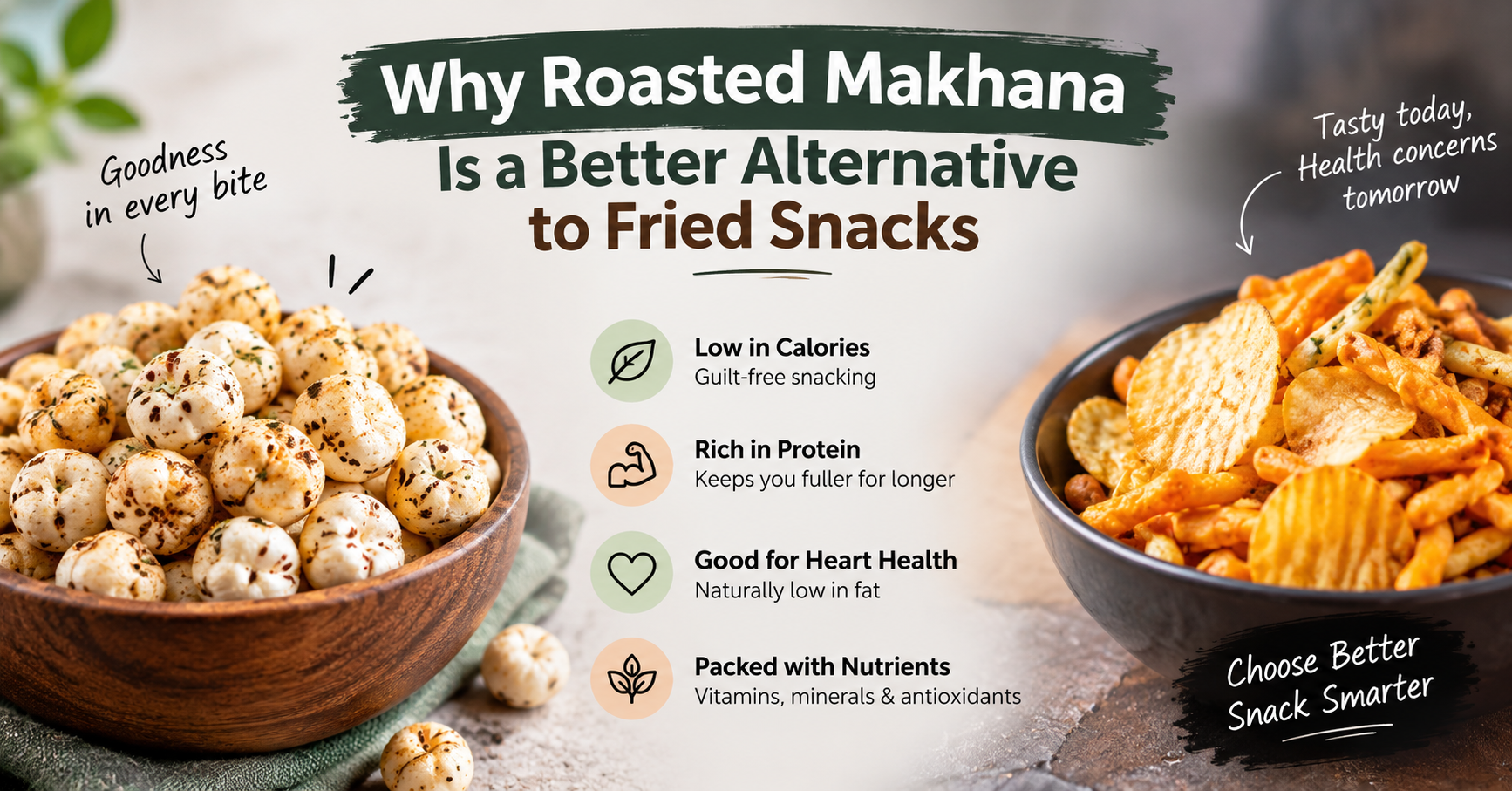
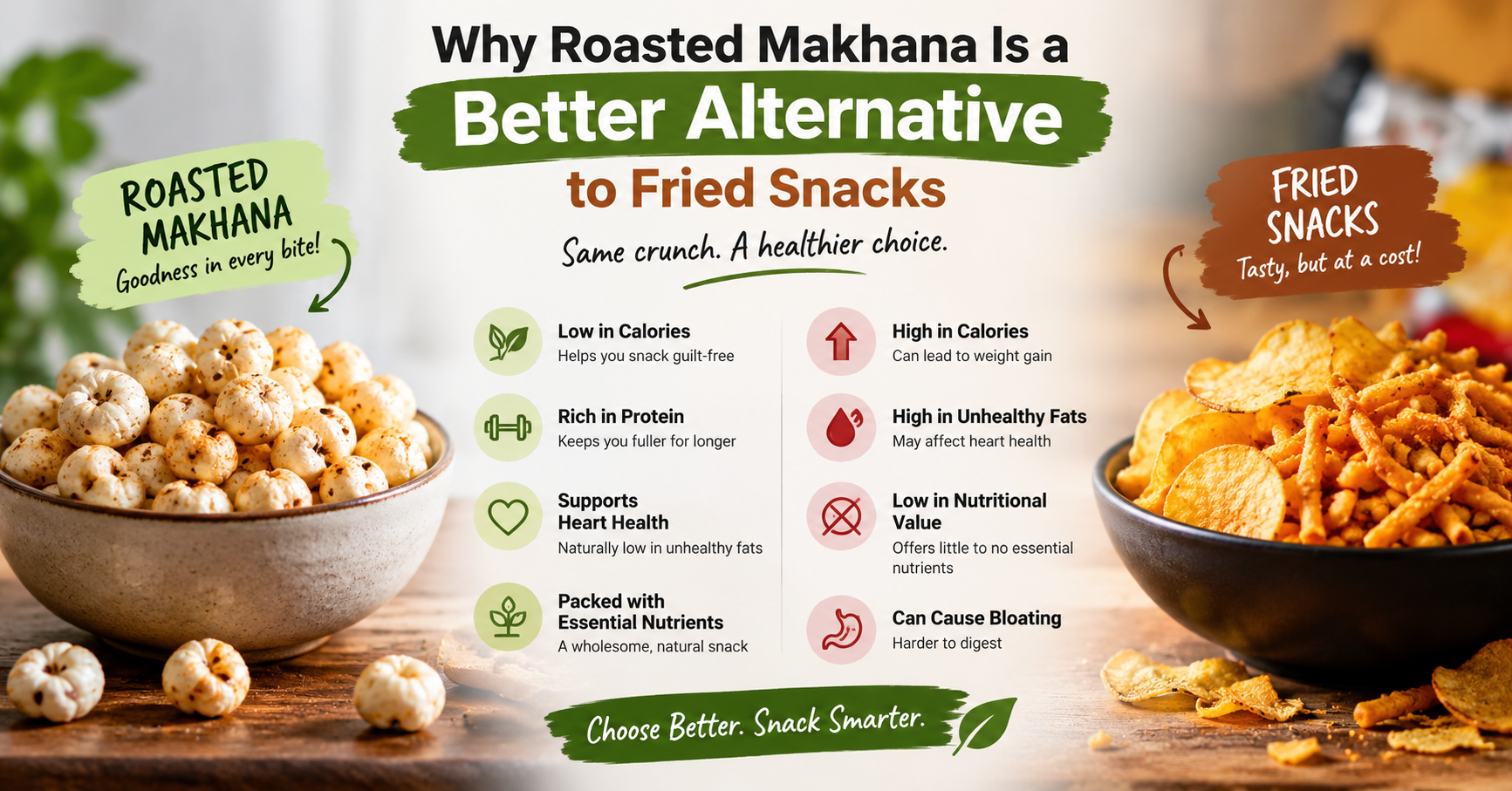
However, makhana can complement these foods. It is particularly useful as a crunchy alternative to highly processed snacks such as chips, fried namkeen, and biscuits.
For people looking for healthy snacks for everyday eating, roasted makhana can be a convenient option.
Protein in 30g of Makhana
A 30-gram serving is a practical quantity for a snack. It provides approximately 3 grams of protein.
You can improve the overall protein content of your snack by pairing makhana with other nutritious foods. For example, you could have roasted makhana with Greek yogurt, curd, roasted chickpeas, or a protein-rich meal.
This approach makes the snack more nutritionally balanced rather than relying on makhana alone for protein.
Does Roasting Makhana Reduce Protein?
Roasting makhana does not normally cause a major loss of protein when it is cooked gently. However, very high temperatures or prolonged cooking can affect some nutrients.
The bigger difference usually comes from what you add during preparation.
Plain dry-roasted makhana keeps the snack relatively simple. Adding large amounts of ghee, butter, sugar, caramel, or other calorie-dense ingredients can significantly increase its overall calorie content.
For a lighter snack, roast makhana and season it with ingredients such as black pepper, turmeric, cumin, chilli powder, or a small amount of salt.
Makhana for Weight Management
Makhana is frequently included in weight-management diets because it can provide a crunchy and satisfying snack without the high fat content found in many fried snacks.
Its fibre content may also contribute to fullness. However, portion size still matters because makhana contains carbohydrates and calories.
Instead of eating directly from a large container, measure a serving of around 20–30 grams. This makes it easier to manage overall calorie intake.
Also remember that adding generous amounts of ghee or oil can substantially increase the calories in your snack.
Is Makhana Good for Muscle Building?
Makhana can be included in a muscle-building diet, but it should not be your main protein source.
Muscle growth requires adequate total protein along with resistance training, sufficient calories, sleep, and overall nutrition. Since makhana contains only around 3 grams of protein per 30-gram serving, you would need other protein-rich foods throughout the day.
You can combine makhana with foods such as milk, curd, Greek yogurt, paneer, eggs, or legumes depending on your dietary preferences.
Makhana vs Other Protein-Rich Foods
Compared with several common protein foods, makhana has a relatively modest protein content.
For example, 100 grams of many protein-rich foods can provide considerably more protein than makhana. Soy products, pulses, dairy products, eggs, meat, and fish are generally better choices when the goal is specifically to increase protein intake.
Makhana's strength is its combination of light texture, low fat content, fibre, and convenience, rather than exceptionally high protein.
How to Eat Makhana for Better Nutrition
There are several simple ways to include makhana in your daily diet:
- Dry roast it and add mild spices.
- Use it as a replacement for fried snacks.
- Mix it with roasted nuts and seeds for a homemade trail mix.
- Add a small portion to your evening snack.
- Pair it with a protein-rich food such as curd or Greek yogurt.
- Avoid excessive sugar, butter, or ghee if you are watching calories.
So, how much protein does makhana have? Around 9–10 grams of protein per 100 grams, or approximately 3 grams in a 30-gram serving. This makes makhana a nutritious snack but not a high-protein food.
Its main benefits come from its combination of moderate protein, carbohydrates, fibre, low fat, and versatility. For a balanced diet, enjoy makhana alongside other protein-rich foods rather than depending on it as your primary protein source.