
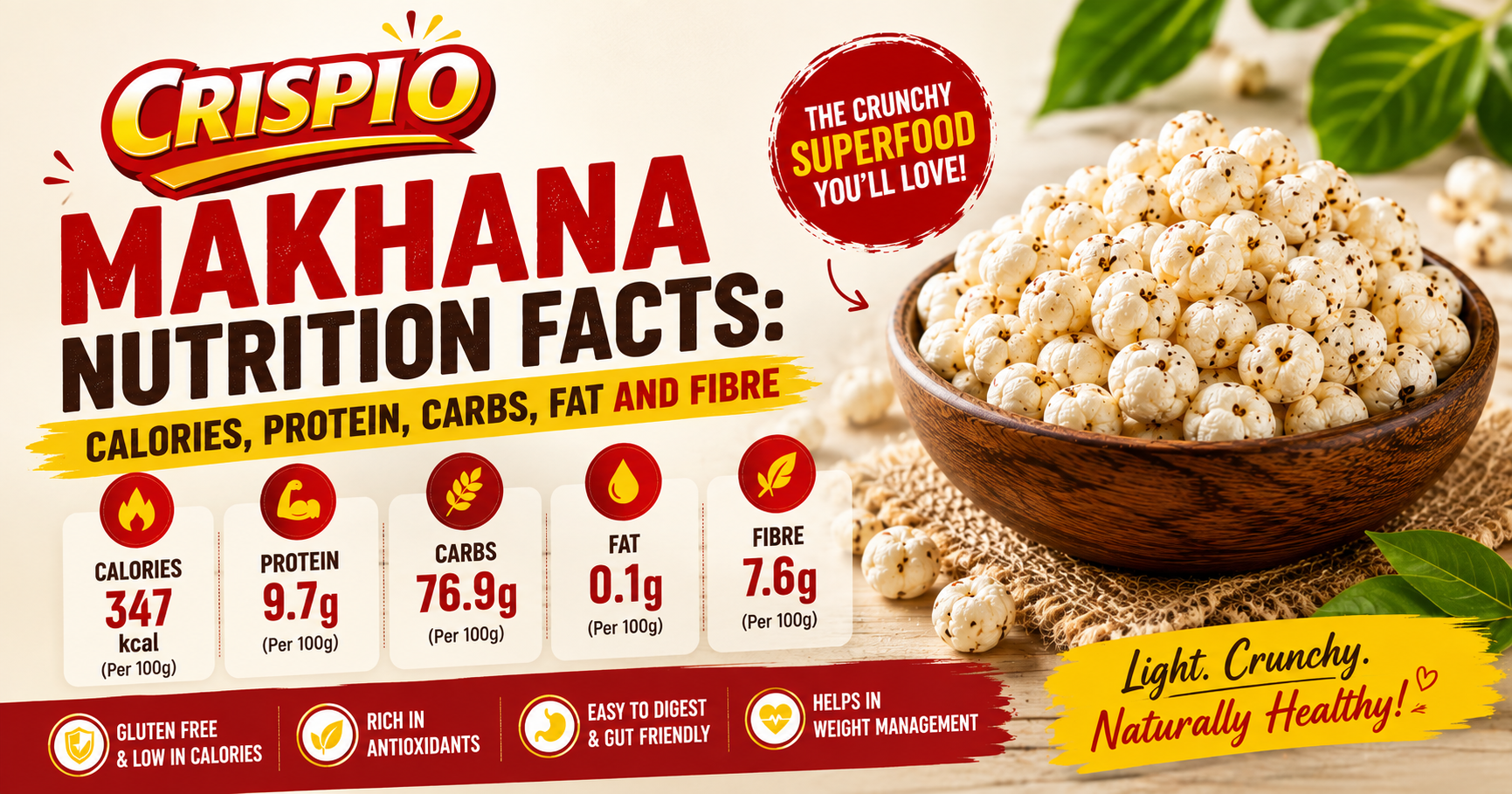
Makhana, also known as fox nuts or lotus seeds, has become a popular healthy snack in India. Light, crunchy, and easy to prepare, makhana is often roasted and seasoned for a nutritious alternative to chips and other fried snacks. But what exactly does makhana contain? How many calories are in makhana, and is it a good source of protein and fibre?
Understanding makhana nutrition facts can help you decide how much to include in your daily diet. From calories and carbohydrates to protein, fat, and fibre, makhana offers several nutrients while being naturally low in fat.
Makhana Nutrition Facts at a Glance
The exact nutritional value can vary depending on the variety and preparation method. Plain, dry-roasted makhana generally provides the following nutrients per 100 grams:
| Nutrient | Approximate Amount per 100g |
|---|---|
| Calories | 350–370 kcal |
| Protein | 9–10 g |
| Carbohydrates | 75–80 g |
| Fat | 0.5–1 g |
| Fibre | 12–14 g |
| Calcium | Around 50–60 mg |
| Iron | Around 1–2 mg |
These figures are approximate and can change based on processing and cooking methods. Adding ghee, oil, sugar, or other ingredients will also increase the calorie content.
How Many Calories Are in Makhana?
One of the most common searches about this snack is makhana calories. Around 100 grams of plain makhana contains approximately 350–370 calories. However, people usually consume a much smaller portion.
A serving of around 25–30 grams of plain roasted makhana may provide roughly 90–110 calories. This makes it a convenient snack option when consumed in a sensible portion.
However, the preparation method matters. Makhana roasted with large amounts of ghee or oil can contain considerably more calories. If you are watching your calorie intake, dry roasting or using a small amount of oil can be a better option.
Makhana Protein Content
When it comes to makhana protein, the snack provides a moderate amount. Approximately 100 grams of makhana can contain around 9–10 grams of protein.
Although makhana is not considered a high-protein food like paneer, eggs, dairy products, or legumes, it can still contribute to your overall daily protein intake.
For a balanced snack, roasted makhana can be combined with other protein-rich foods such as roasted chana, Greek yogurt, or nuts.
Makhana Carbohydrates: Is It High in Carbs?
Makhana contains a significant amount of carbohydrates. Approximately 100 grams may provide around 75–80 grams of carbohydrates. This means people following a strict low-carbohydrate diet should pay attention to portion sizes.
At the same time, carbohydrates are an important source of energy. The overall nutritional value of a meal depends on the portion, preparation method, and other foods consumed alongside it.
So, rather than completely avoiding makhana because of its carbohydrate content, focus on portion control and balanced meals.
How Much Fat Does Makhana Have?
One of the biggest nutritional advantages of plain makhana is its naturally low fat content. Makhana fat content is generally around 0.5–1 gram per 100 grams, depending on the product.
This makes plain roasted makhana an appealing alternative to many fried snacks. However, remember that the fat content can increase significantly when makhana is cooked with ghee or oil.
If you want a lighter snack, try dry-roasting makhana and adding simple seasonings such as black pepper, cumin, turmeric, or a small amount of salt.
Makhana Fibre Content
Makhana fibre is another reason this snack is popular among health-conscious consumers. Around 100 grams of makhana may provide approximately 12–14 grams of dietary fibre.
Fibre is important for maintaining normal digestive health and can contribute to feelings of fullness. Including fibre-rich foods in a balanced diet may also help support regular bowel movements.
However, eating very large quantities of any high-fibre food suddenly may cause digestive discomfort in some people. Start with a moderate portion and drink enough water throughout the day.
Is Makhana Good for Weight Management?
Makhana is often included in weight-management diets because plain roasted makhana is relatively low in fat and can be satisfying when eaten in controlled portions.
Instead of reaching for fried snacks, biscuits, or heavily processed foods, you can choose a small bowl of roasted makhana. Its crunchy texture can make it an enjoyable snack without requiring deep frying.
However, makhana for weight loss should not be viewed as a magic food. Weight management depends on your overall calorie intake, physical activity, sleep, and dietary pattern.
Also, calorie-heavy toppings such as excess ghee, butter, caramel, sugar, or chocolate can turn makhana into a much more calorie-dense snack.
Best Way to Eat Makhana
For a simple and healthy preparation, dry roast makhana in a pan over low to medium heat until it becomes crisp. You can then add your preferred seasoning.
Some easy combinations include:
- Roasted makhana with black pepper and salt
- Makhana with turmeric and cumin
- Makhana roasted with a small amount of ghee
- Spiced makhana with chilli powder
- Makhana mixed with roasted nuts and seeds
For everyday snacking, keep the serving size moderate and avoid adding excessive oil, sugar, or salt.
Frequently Asked Questions About Makhana Nutrition
Is makhana high in protein?
Makhana provides around 9–10 grams of protein per 100 grams, but it is not considered a high-protein food.
How many calories are in 30 grams of makhana?
Approximately 30 grams of plain makhana may provide around 105–110 calories, although the exact amount varies by product.
Is makhana good for digestion?
Makhana contains dietary fibre, which can support normal digestive health when consumed as part of a balanced diet.
Is makhana low in fat?
Yes. Plain makhana is naturally low in fat. However, roasting it with large amounts of ghee or oil increases its total fat and calorie content.
Makhana is a versatile Indian snack that provides carbohydrates, moderate protein, dietary fibre, and very little naturally occurring fat. Its crunchy texture and easy preparation make it a convenient alternative to many fried snacks.
If you are looking at makhana nutrition facts, focus not only on calories but also on serving size and preparation method. Plain or lightly roasted makhana can easily fit into a balanced eating pattern. Enjoy it in moderation and pair it with other nutritious foods to create a well-rounded diet.