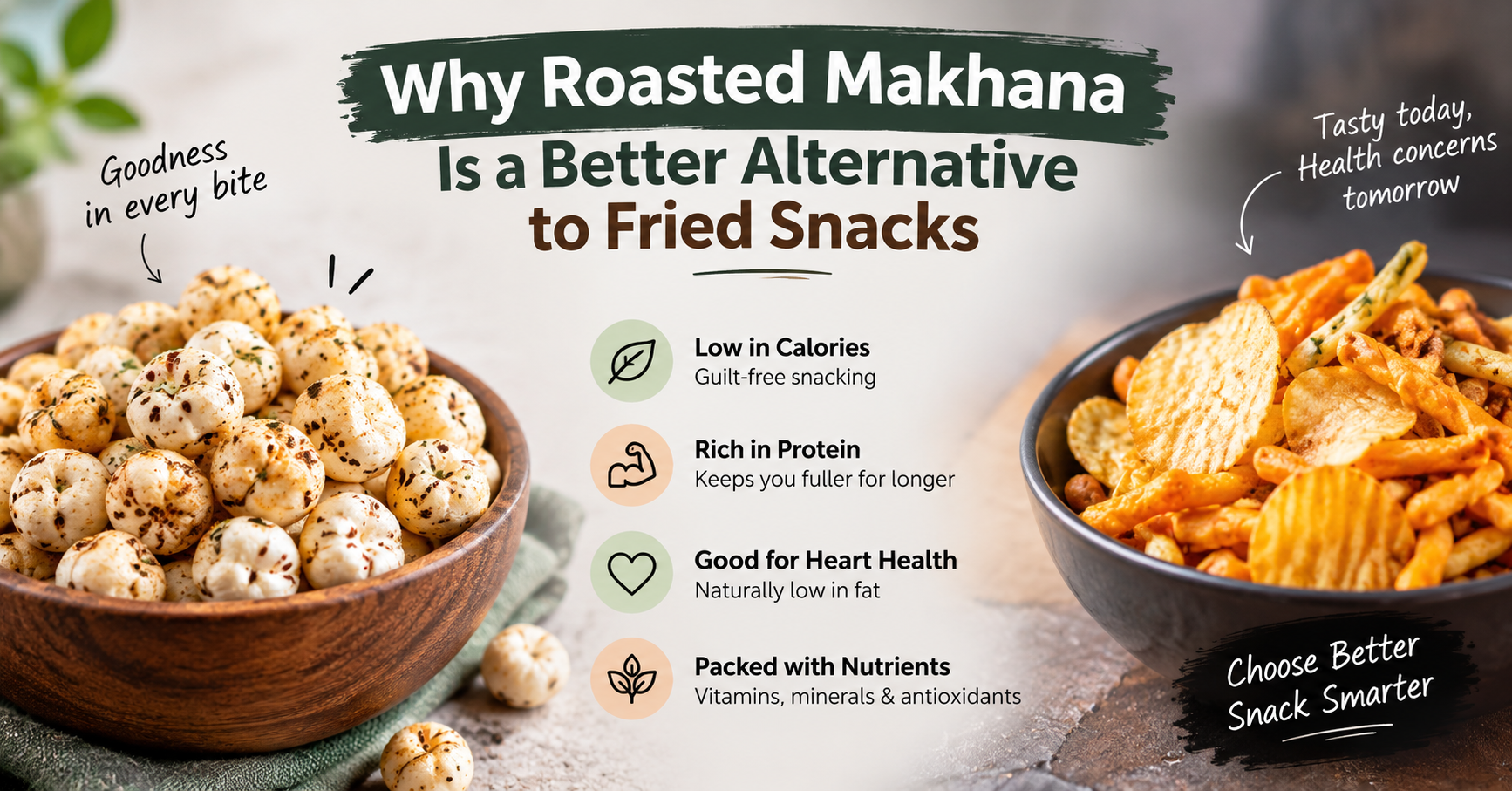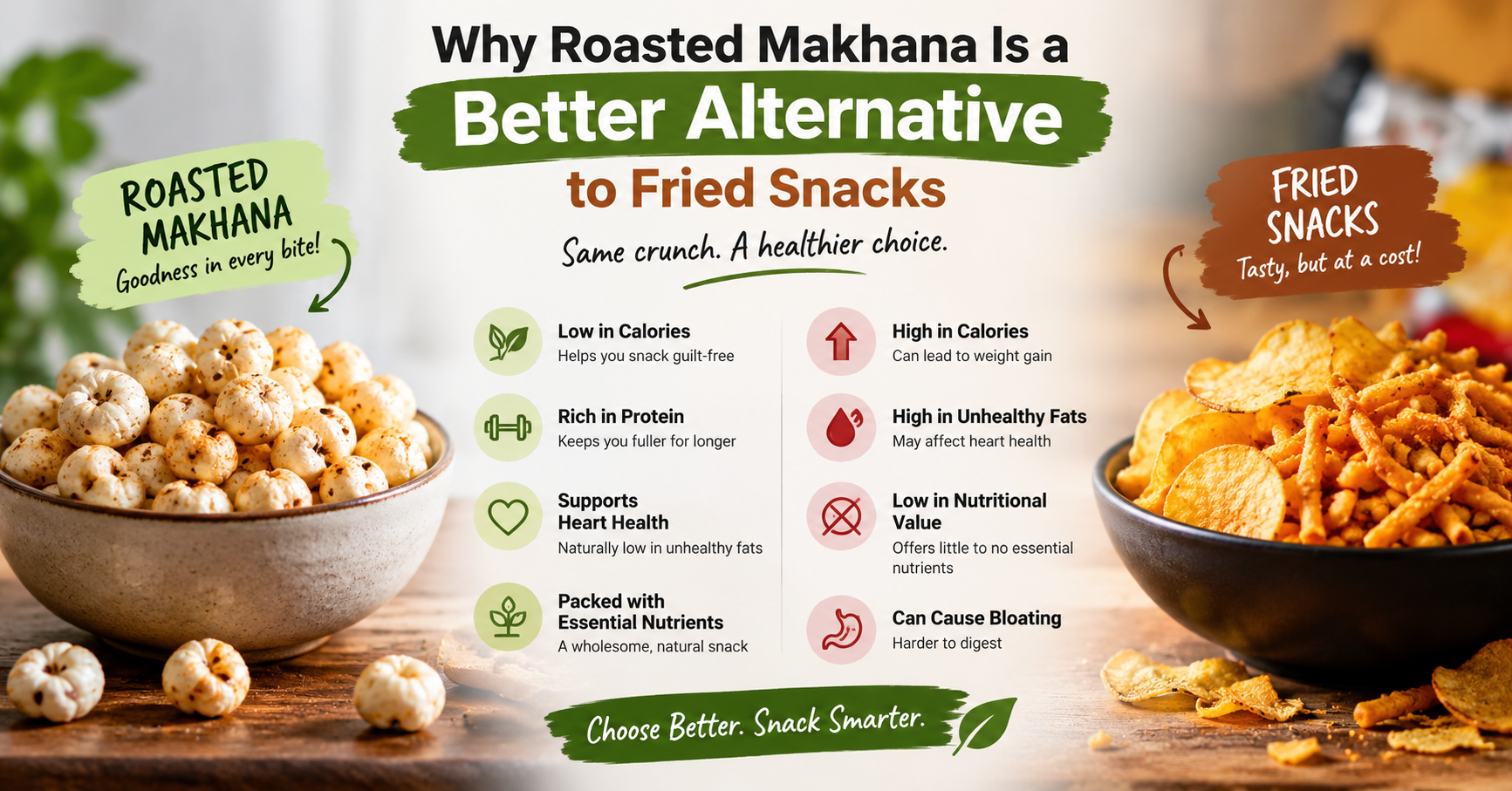
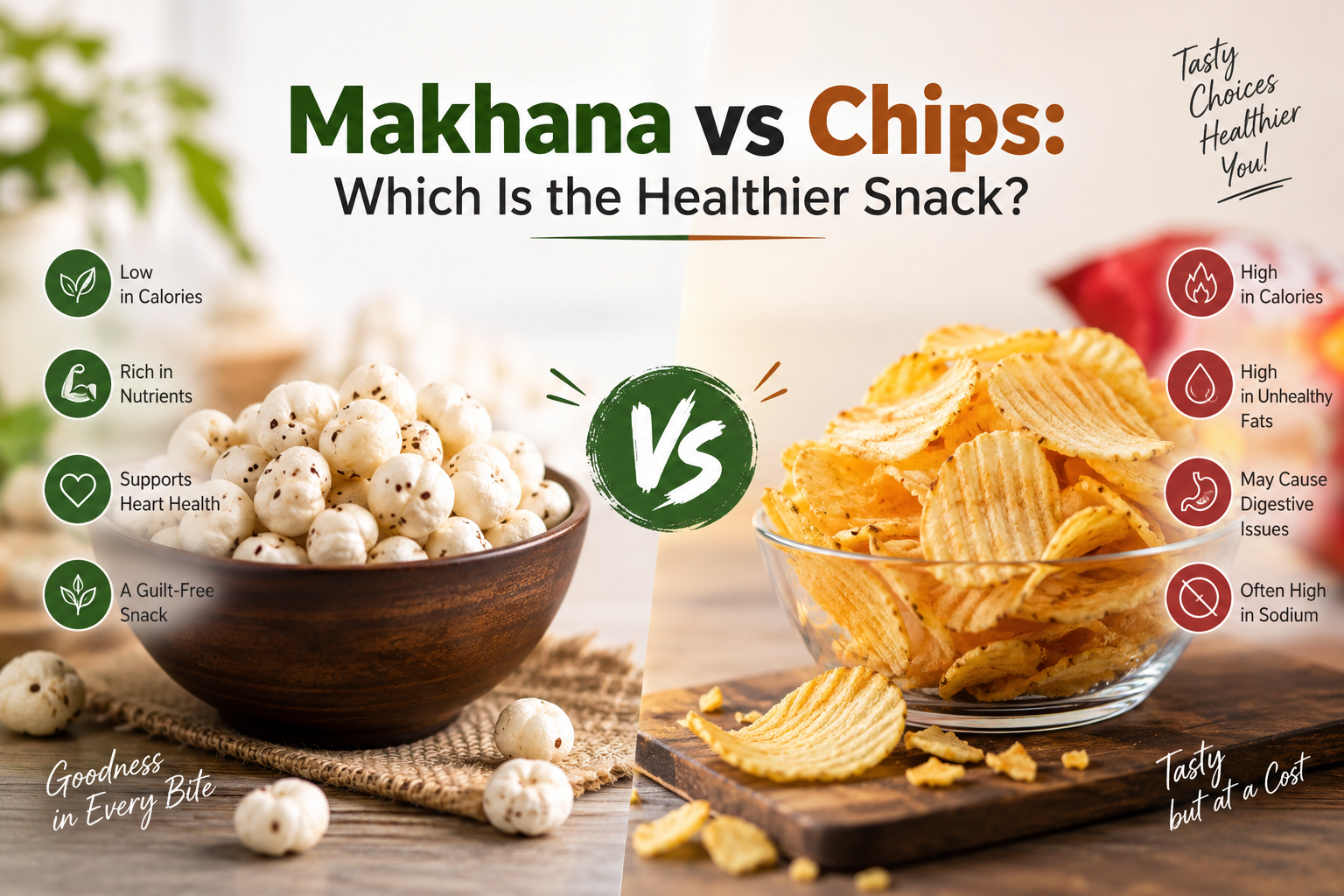
When hunger strikes between meals, snacks are often the easiest way to satisfy it. Chips are one of the most popular choices because they are crispy, salty, tasty, and easily available. But if you are trying to eat better, makhana vs chips is a comparison worth making.
Makhana, also known as fox nuts or lotus seeds, has become a popular healthy snack in India. It can be roasted and seasoned with simple ingredients, making it a crunchy alternative to traditional chips.
So, is makhana healthier than chips? In most cases, yes. However, the way you prepare and eat makhana also matters.
What Is Makhana?
Makhana is the edible seed of the Euryale ferox plant. It is commonly roasted and eaten as a snack. Unlike many packaged snacks, plain makhana does not naturally contain a large amount of added salt, oil, or flavouring.
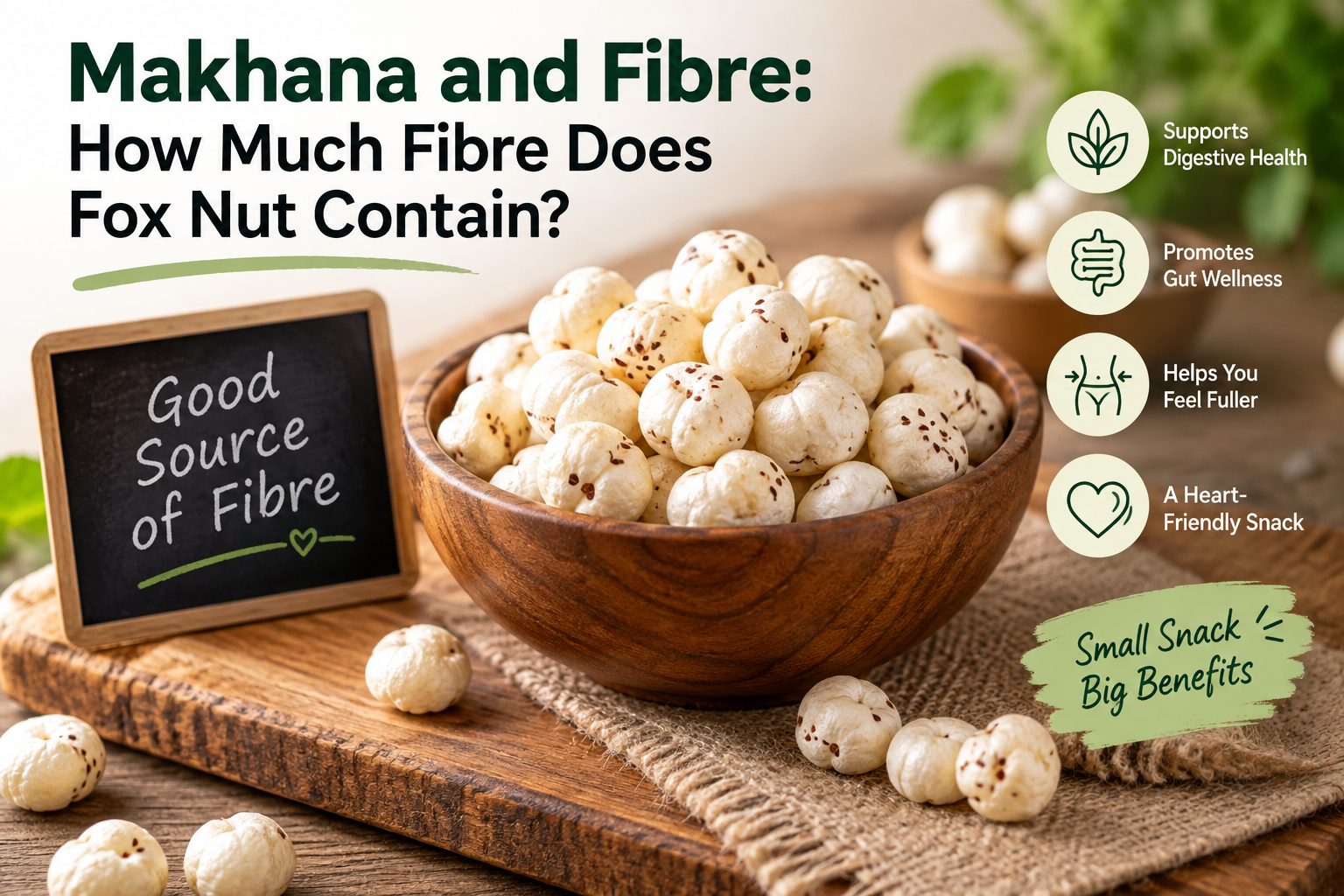
Approximately 100 grams of makhana provides around 350–370 calories, along with about 9–10 grams of protein, 75–80 grams of carbohydrates, 0.5–1 gram of fat, and 12–14 grams of fibre.
Its light and crunchy texture makes it suitable for people looking for an alternative to fried snacks.
What Makes Chips Less Healthy?
Potato chips can certainly fit into an occasional balanced diet, but they are generally not the best everyday snack.
Most conventional chips are deep-fried or processed with added oil. They can also contain considerable amounts of sodium. Flavoured varieties may include additional seasonings, additives, and other ingredients.
The combination of high fat, sodium, and calories can make it very easy to eat a large quantity without feeling satisfied.
Another issue is portion size. You may open a packet intending to eat a few chips but end up finishing most of it because chips are highly palatable.
Makhana vs Chips: Nutritional Comparison
The biggest difference between the two comes down to preparation and ingredients.
| Factor | Makhana | Potato Chips |
|---|---|---|
| Main ingredient | Fox nuts | Potatoes |
| Typical preparation | Roasted | Usually fried |
| Fibre | Relatively higher | Generally lower |
| Protein | Around 9–10g per 100g | Usually lower |
| Fat | Naturally very low | Usually considerably higher |
| Sodium | Low when plain | Often high |
| Added oil | Optional | Commonly used |
| Everyday snack potential | Better choice | Better as an occasional snack |
This does not mean every bowl of makhana is automatically healthier than every type of chips. A heavily buttered, salted, or oil-coated makhana snack can also become high in calories.
Why Makhana Can Be a Better Snack
One major advantage of makhana is its naturally low fat content. When you roast it with little oil, you can create a crunchy snack without relying on deep frying.
Makhana also provides fibre, which can contribute to better fullness between meals. This can be useful when you often feel hungry soon after eating a small snack.
Another benefit is flexibility. You can prepare makhana with simple seasonings such as black pepper, roasted cumin, turmeric, or a small amount of rock salt.
For people trying to reduce processed foods, roasted makhana can therefore be a practical option.
Is Makhana Good for Weight Management?
Makhana can be included in a weight-management diet, but portion size still matters.
A common mistake is assuming that a healthy snack can be eaten without limits. Makhana still contains calories, particularly when consumed in large quantities or prepared with generous amounts of ghee, butter, or oil.
A moderate serving of roasted makhana can work well as a snack between meals. Pairing it with other nutritious foods during the day can also make your overall diet more balanced.
The key is not simply choosing makhana over chips, but also paying attention to preparation and quantity.
Which Is Better for Children?
For children, roasted makhana can be a useful alternative to highly processed packaged snacks. Its crunchy texture can make it appealing while allowing parents to control the amount of salt and oil.
However, children need a varied diet rather than relying on one “healthy” snack. Fruits, vegetables, dairy or suitable alternatives, nuts, seeds, and other nutritious foods should also be part of their meals according to their individual needs.
How to Make Healthy Roasted Makhana
Making makhana at home is simple.
First, dry roast the makhana in a pan over low to medium heat. Keep stirring so that it roasts evenly. After several minutes, check whether it has become crisp. You can crush one between your fingers to test the texture.
Next, add a small amount of ghee or oil if desired. Season it with roasted cumin powder, black pepper, turmeric, or a little salt.
Allow it to cool before storing it in an airtight container.
Avoid adding too much butter, sugar, caramel, or salty seasoning if your goal is to keep the snack healthier.
Makhana or Chips: What Should You Choose?
If you are choosing between a bowl of lightly roasted makhana and a packet of fried potato chips, makhana is generally the healthier everyday option.
It offers more fibre and protein than many conventional chip options while naturally containing very little fat. It also gives you more control over the ingredients when prepared at home.
Chips, on the other hand, can still be enjoyed occasionally. Completely avoiding your favourite foods is not always necessary. The better approach is to keep highly processed snacks as occasional treats and choose more nutritious foods more often.
So, makhana vs chips—which is healthier? For regular snacking, roasted makhana usually wins.
Makhana can provide fibre and some protein while being naturally low in fat. Chips are generally higher in added fat and sodium and can be easier to overeat.
Still, preparation matters. Plain or lightly seasoned roasted makhana is a much better choice than heavily buttered or sugary makhana.
If you want a simple crunchy snack that fits more easily into a balanced diet, make roasted makhana your regular option and keep chips for occasional cravings.