
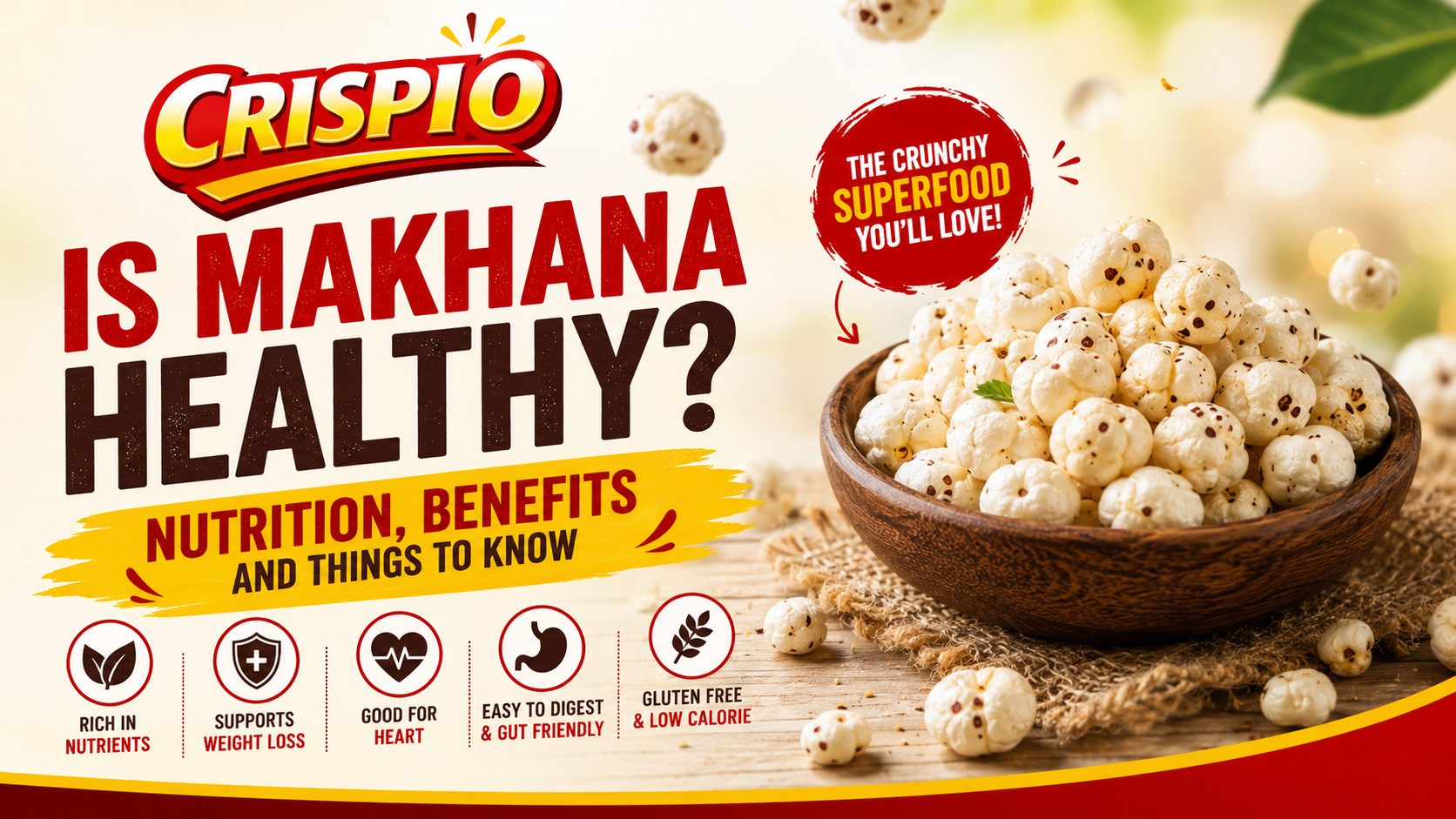
Makhana, also called fox nuts or lotus seeds, has become a very popular healthy snack in India. You can find it in homes, offices, gyms and even in diet plans. It is light, crunchy and can be prepared in many ways. But the common question is, is makhana healthy?
The simple answer is yes. Makhana can be a healthy addition to your diet when eaten in the right quantity and prepared with healthy ingredients. It provides carbohydrates, some protein, minerals and very little fat naturally. However, the way you cook or season makhana also matters.
Let’s understand its nutrition, benefits and a few things you should know before making it a regular snack.
What is Makhana?
Makhana is made from the seeds of the prickly water lily plant, which grows mainly in ponds and wetlands. The seeds are collected, dried and roasted to make the crunchy snack that we commonly eat.
In India, makhana is also used during fasting and in dishes like kheer, curry and roasted snack mixes. Today, roasted makhana is especially popular because it can be a better alternative to chips, fried namkeen and other highly processed snacks.
Makhana Nutrition
The exact nutrition of makhana can vary depending on the brand and preparation method. Plain roasted makhana is generally considered a low-fat snack.
A typical serving of around 30 grams of plain makhana may provide:
- Calories: Around 100–110 kcal
- Carbohydrates: Around 20–22 grams
- Protein: Around 3–4 grams
- Fat: Less than 1 gram
- Fiber: A small amount
- Minerals: Includes magnesium, potassium, phosphorus and calcium
Makhana is not a high-protein food, so it should not be considered a replacement for protein-rich foods like paneer, eggs, pulses or dairy. Still, it can fit well into a balanced diet.
Benefits of Eating Makhana
1. A Better Snacking Option
One of the biggest benefits of makhana is that it can replace less healthy snacks. Instead of eating fried chips or biscuits every evening, you can have lightly roasted makhana.
It gives you something crunchy to eat without adding a lot of fat, especially when it is roasted without excessive oil or butter.
2. May Support Weight Management
If you are trying to manage your weight, portion size is very important. Makhana can be useful because plain roasted makhana is relatively light and can help satisfy snack cravings.
However, eating unlimited amounts is not a good idea. Makhana still contains calories and carbohydrates. Adding lots of ghee, butter, sugar or other toppings can also increase the calorie content.
3. Contains Antioxidant Compounds
Makhana contains naturally occurring compounds with antioxidant properties. Antioxidants help protect cells from oxidative stress caused by free radicals.
This does not mean makhana is a medicine or can prevent diseases by itself. It is simply one nutritious food that can be included as part of a varied diet.
4. May Be Good for Heart-Friendly Eating
Plain makhana contains very little fat and no cholesterol naturally. Because of this, it can be included in a heart-conscious eating pattern.
The important thing is how you prepare it. Deep-fried makhana or versions loaded with salt and butter may not offer the same advantage as simple roasted makhana.
5. Provides Important Minerals
Makhana contains minerals such as magnesium, phosphorus and potassium. These nutrients are involved in several normal functions of the body, including energy metabolism, muscles and bones.
A balanced diet should provide these nutrients from different foods, and makhana can contribute a small amount.
6. Naturally Gluten-Free
Makhana is naturally gluten-free, which makes it a useful snack option for people who avoid gluten. Still, packaged flavoured makhana should be checked for its ingredients and possible cross-contamination if you have a medically diagnosed gluten-related condition.
Is Makhana Good for Diabetes?
This is where portion control becomes important. Makhana is often promoted as a diabetes-friendly snack, but it still contains carbohydrates and can affect blood glucose.
For people managing blood sugar, the quantity, cooking method and what you eat along with makhana all matter. Plain roasted makhana in a sensible portion may be a better choice than sugary or heavily processed snacks, but it should not be treated as a diabetes treatment.
If you have diabetes, your overall meal plan should be based on advice from your doctor or dietitian.
How Much Makhana Should You Eat?
There is no single amount that is perfect for everyone. For a snack, around 20–30 grams of roasted makhana can be a reasonable portion for many people.
You can roast it in a pan with a small amount of ghee or oil and add simple spices such as black pepper, cumin or a little salt.
The main thing is not to keep eating directly from a large container. Because makhana is light and crunchy, it is easy to eat more than you planned.
Things to Keep in Mind
Makhana is healthy, but it is not a magical superfood. Eating makhana alone will not automatically make your diet healthy.
Some important points are:
- Choose plain or lightly roasted makhana when possible.
- Avoid versions with too much salt, sugar or butter.
- Watch your portion size.
- Pair it with other nutritious foods during the day.
- Check packaged products for added ingredients.
- If you have a food allergy or specific medical condition, take professional dietary advice.
So, is makhana healthy? Yes, plain or lightly roasted makhana can be a nutritious and convenient snack. It is naturally low in fat, provides carbohydrates and some protein, and contains useful minerals and antioxidant compounds.
Its biggest advantage is that it can be used as a crunchy alternative to many fried and highly processed snacks. But preparation matters. A bowl of lightly roasted makhana is very different nutritionally from makhana covered in lots of butter, sugar or heavy seasoning.
The best approach is simple: enjoy makhana in moderation and include it as one part of a balanced diet containing vegetables, fruits, whole grains, pulses, dairy or other protein sources.