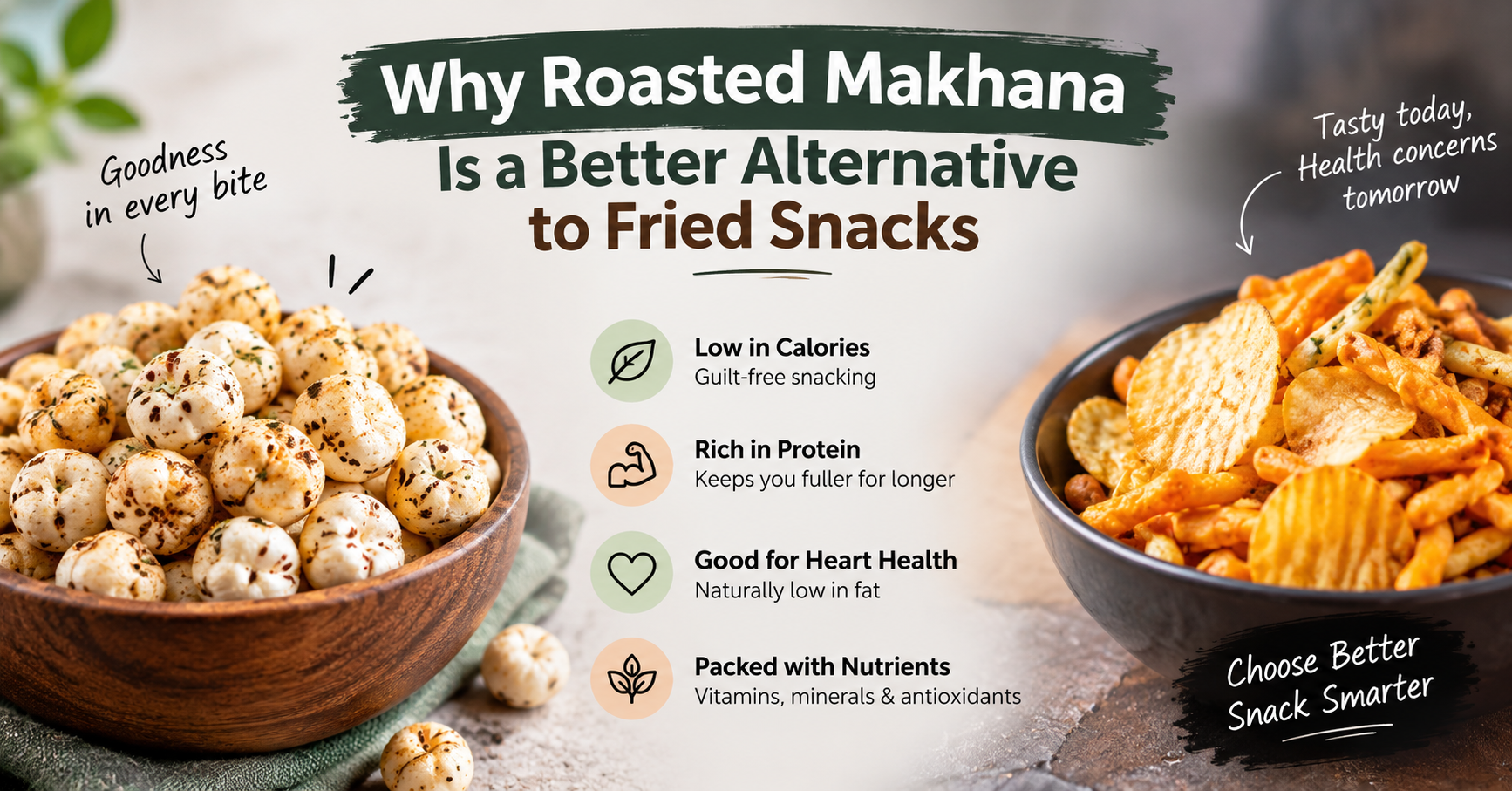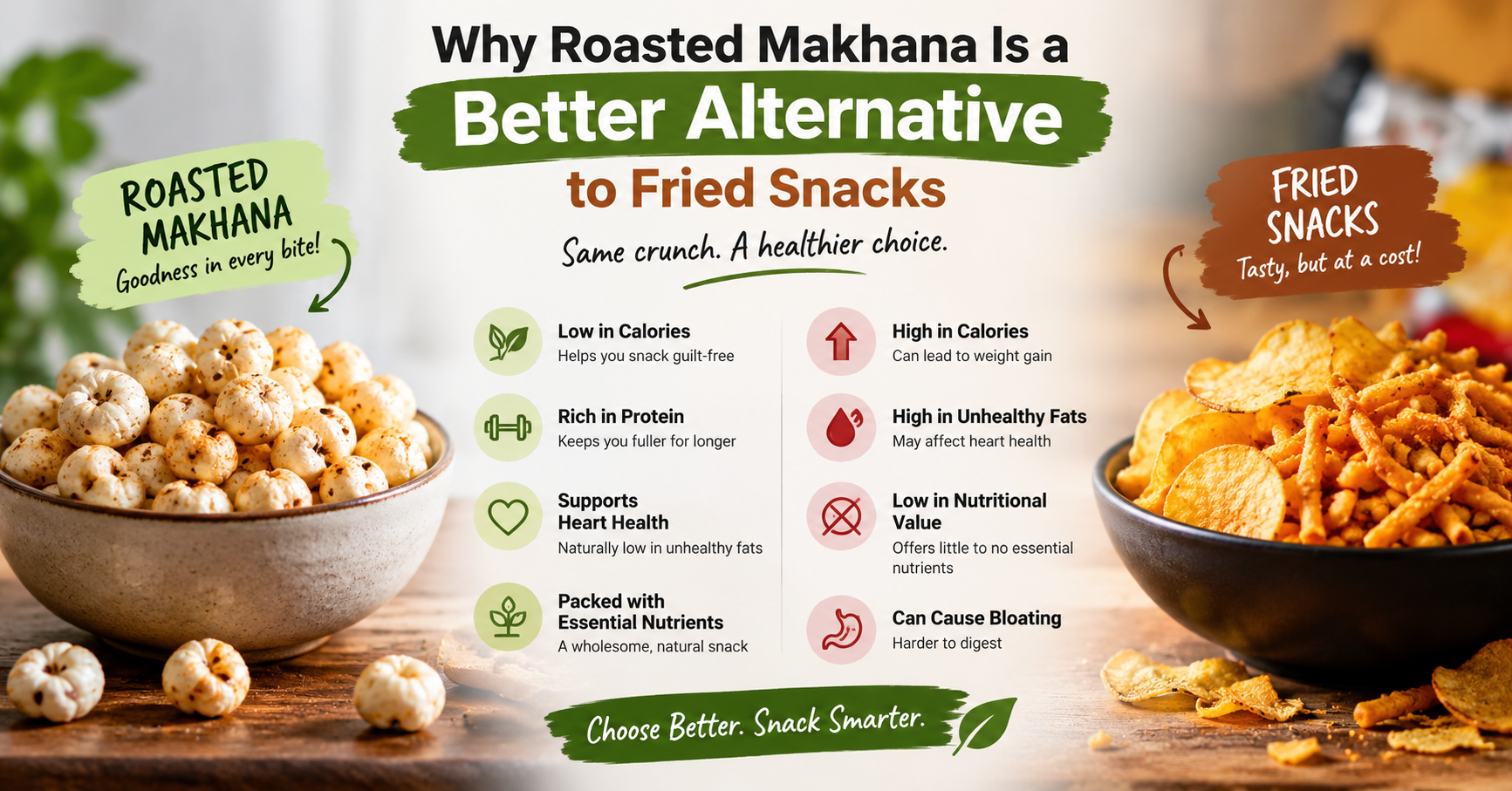
Makhana, also known as fox nuts or lotus seeds, is one of the most popular healthy snacks in India. It is light, crunchy and easy to roast at home. Many people choose makhana instead of chips, namkeen and other fried snacks when they want something tasty with fewer unhealthy ingredients.
But one question is very common: How many calories are in makhana? The answer depends on the quantity you eat and how you prepare it. Plain roasted makhana has a different calorie count compared with makhana roasted in ghee, butter or oil and mixed with sugar or other ingredients.
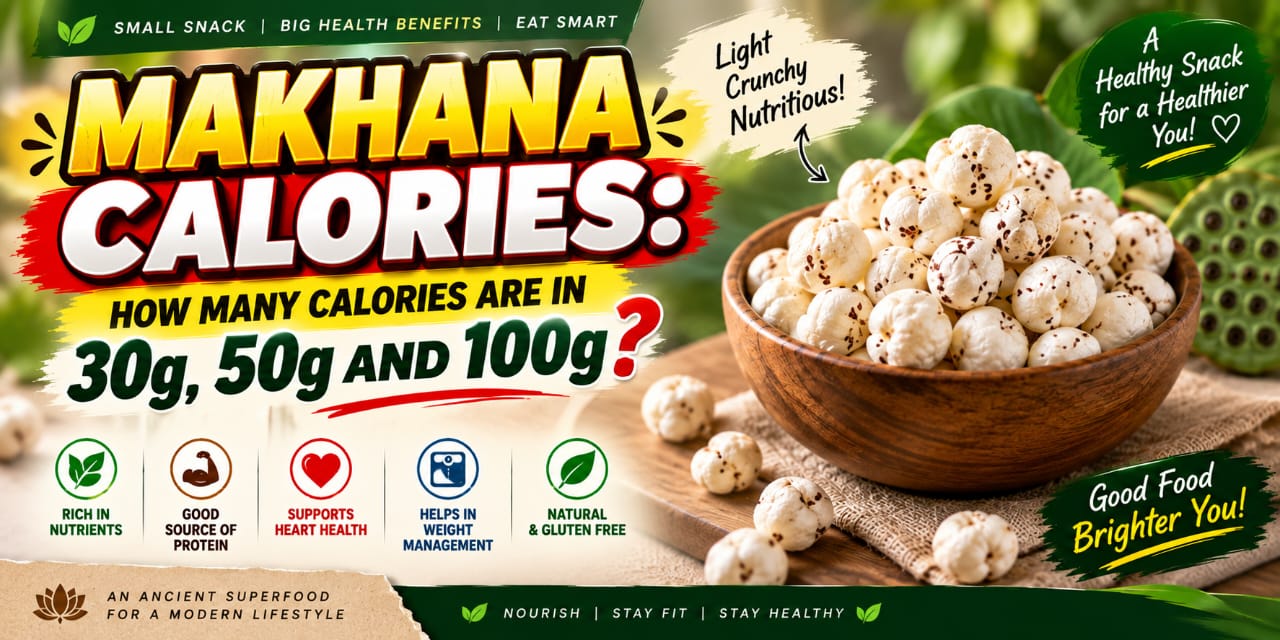
For calorie tracking, portion size is important. Here is a simple guide to makhana calories in 30g, 50g and 100g.
Makhana Calories by Quantity
| Quantity | Approximate Calories |
|---|---|
| 30g Makhana | 105–110 calories |
| 50g Makhana | 175–185 calories |
| 100g Makhana | 350–370 calories |
These values are approximate for plain, dry-roasted makhana. The exact calories may vary depending on the variety, brand and preparation method.
How Many Calories Are in 30g of Makhana?
A 30g serving of makhana contains approximately 105 to 110 calories. This can be a reasonable snack portion for people who want to enjoy makhana between meals.
Thirty grams may look like a fairly large bowl because makhana is lightweight and has a lot of volume. This is one reason why it is often considered a satisfying snack. You can eat a bowl of roasted makhana without consuming the same amount of calories found in many fried snacks.
However, the calorie count can increase quickly if you add:
- Ghee or butter
- Cooking oil
- Sugar or jaggery
- Chocolate coating
- Cheese seasoning
- Cream-based flavourings
For example, plain roasted makhana may remain close to 110 calories per 30g, while a heavily flavoured or sweetened version can contain significantly more calories.
How Many Calories Are in 50g of Makhana?
50g of plain makhana provides around 175 to 185 calories. This is a bigger serving and can work as a filling evening snack or a small part of a balanced meal.
A 50g portion may be suitable when you need something more substantial, especially if you are travelling, working long hours or trying to avoid highly processed snacks. But if you are following a calorie-controlled diet, it is still important to measure your serving.
Makhana is often called a low-calorie snack, but this does not mean you can eat unlimited quantities. Calories add up when portion size increases. Eating 100g of makhana provides much more energy than eating a small 30g serving.
A good idea is to prepare a measured amount rather than eating directly from a large packet. This makes it easier to control your portion.
How Many Calories Are in 100g of Makhana?
100g of makhana contains approximately 350 to 370 calories. This is the standard reference quantity often used on nutrition labels and food databases.
One hundred grams of makhana can provide a significant amount of calories because it is a dry food. Although a single piece of makhana is very light, 100g contains a large quantity.
Besides calories, makhana mainly provides carbohydrates along with some protein and small amounts of other nutrients. The exact nutritional values can vary between products.
If your goal is weight management, you do not necessarily need to avoid makhana. The key is to consider the portion size and total daily calorie intake. A 30g serving is very different from eating 100g at one time.
Are Makhana Calories Good for Weight Management?
Makhana can be included in a balanced diet because it is generally eaten roasted rather than deep-fried. Its crunchy texture can also make it a useful alternative when you have cravings for chips or fried namkeen.
For weight management, preparation matters. The best options are usually:
- Dry-roasted makhana
- Lightly roasted makhana with minimal ghee
- Makhana seasoned with simple spices
- Homemade roasted makhana with controlled ingredients
Try to limit large amounts of added fat and sugar if you are specifically counting calories. Even healthy ingredients such as ghee, nuts and jaggery add calories to the final snack.
Plain Makhana vs Flavoured Makhana Calories
Plain makhana is usually the easiest option for calorie tracking. Packaged flavoured makhana may contain additional ingredients such as vegetable oil, sugar, milk solids, cheese powder or flavouring mixtures.
Always check the nutrition label when buying ready-to-eat makhana. Compare:
- Calories per 100g
- Serving size
- Added sugar
- Fat content
- Sodium
- Ingredients used for roasting and flavouring
This can help you choose a product that matches your dietary needs.
What Is the Best Portion Size of Makhana?
For many people, around 25g to 30g of plain roasted makhana can be a practical snack portion. It provides roughly 100 calories and can be combined with other foods if needed.
For example, you can enjoy roasted makhana with unsweetened tea or use it as part of a snack containing fruit and another protein-rich food. Your ideal portion may vary depending on your age, activity level and overall diet.
If you are simply looking for a lighter snack, 30g is a good starting point. If you are hungry and need a more filling snack, 40g to 50g may be appropriate depending on your total calorie requirements.
Understanding makhana calories makes it easier to enjoy this popular snack while managing your food intake. A 30g serving contains around 105–110 calories, 50g provides approximately 175–185 calories, and 100g contains about 350–370 calories.
Plain roasted makhana is generally the easiest choice when you want better control over calories. Remember that ghee, oil, sugar and packaged flavourings can increase the final calorie count. Measure your portion, check product labels and choose a preparation method that fits your overall diet.
Whether you enjoy it as a quick evening snack or a crunchy alternative to fried foods, makhana can be a convenient addition to a balanced eating plan when eaten in suitable portions.