Snacking is a normal part of our daily routine. Whether it is during office breaks, while watching TV, or with evening tea, many people reach for something crunchy and tasty. Namkeen is one of the most popular choices in India, but in recent years, makhana (fox nuts) has become a popular alternative for people looking for a lighter and healthier snack.
But which one is actually better for everyday eating—makhana or namkeen? The answer depends on ingredients, preparation, portion size, and how often you eat them. Let us compare both snacks to understand which fits better into a balanced diet.
What Is Makhana?
Makhana, also known as fox nuts or lotus seeds, is a light and crunchy snack made from the seeds of the Euryale ferox plant. It can be roasted and seasoned with simple ingredients such as black pepper, herbs, spices, or a small amount of salt.
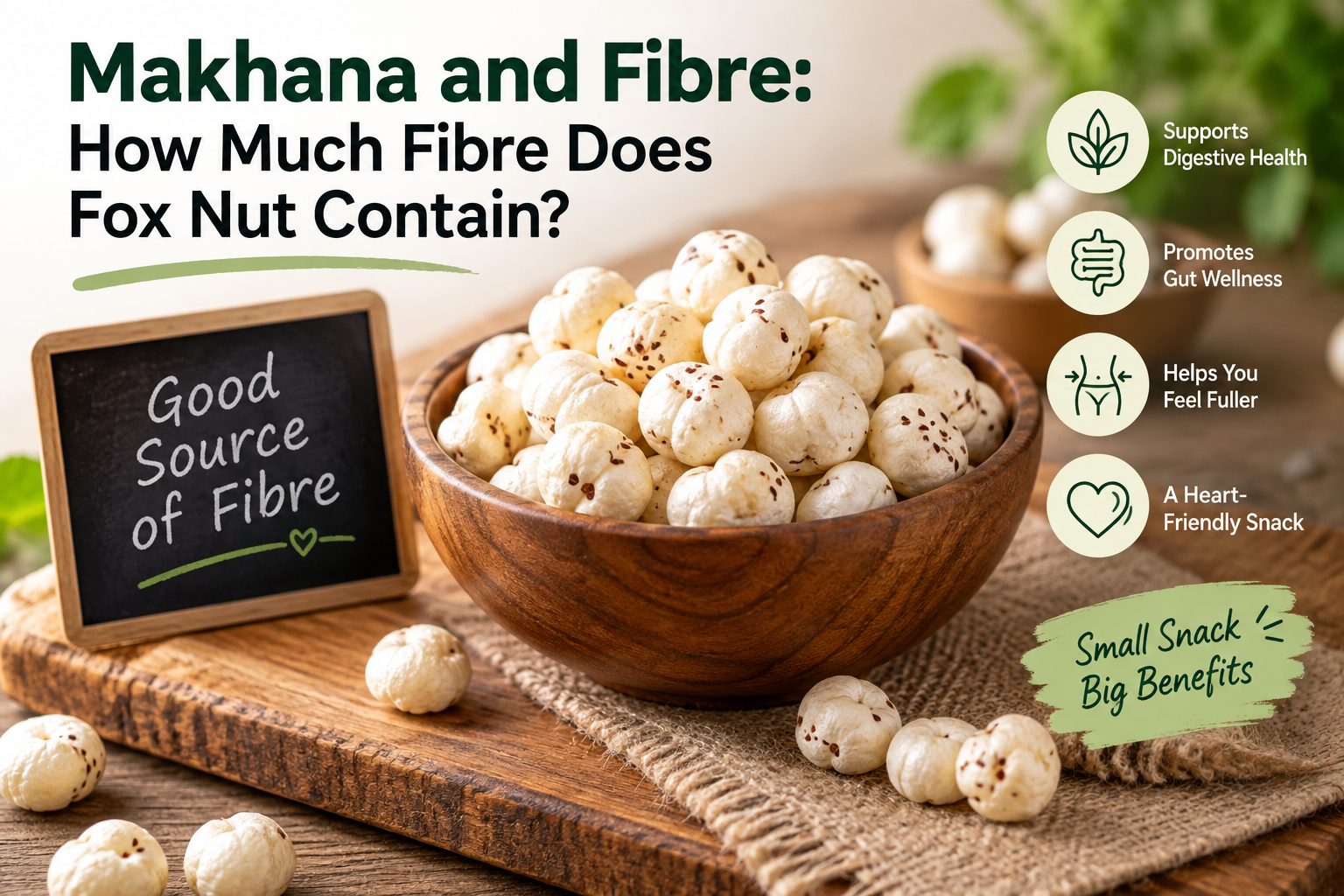
Makhana is naturally low in fat and provides carbohydrates, some protein and dietary fibre. Around 100 grams of makhana may provide approximately 350–370 calories, 9–10 grams of protein, 75–80 grams of carbohydrates, 0.5–1 gram of fat and 12–14 grams of fibre. However, the exact nutrition can change depending on the brand and preparation method.
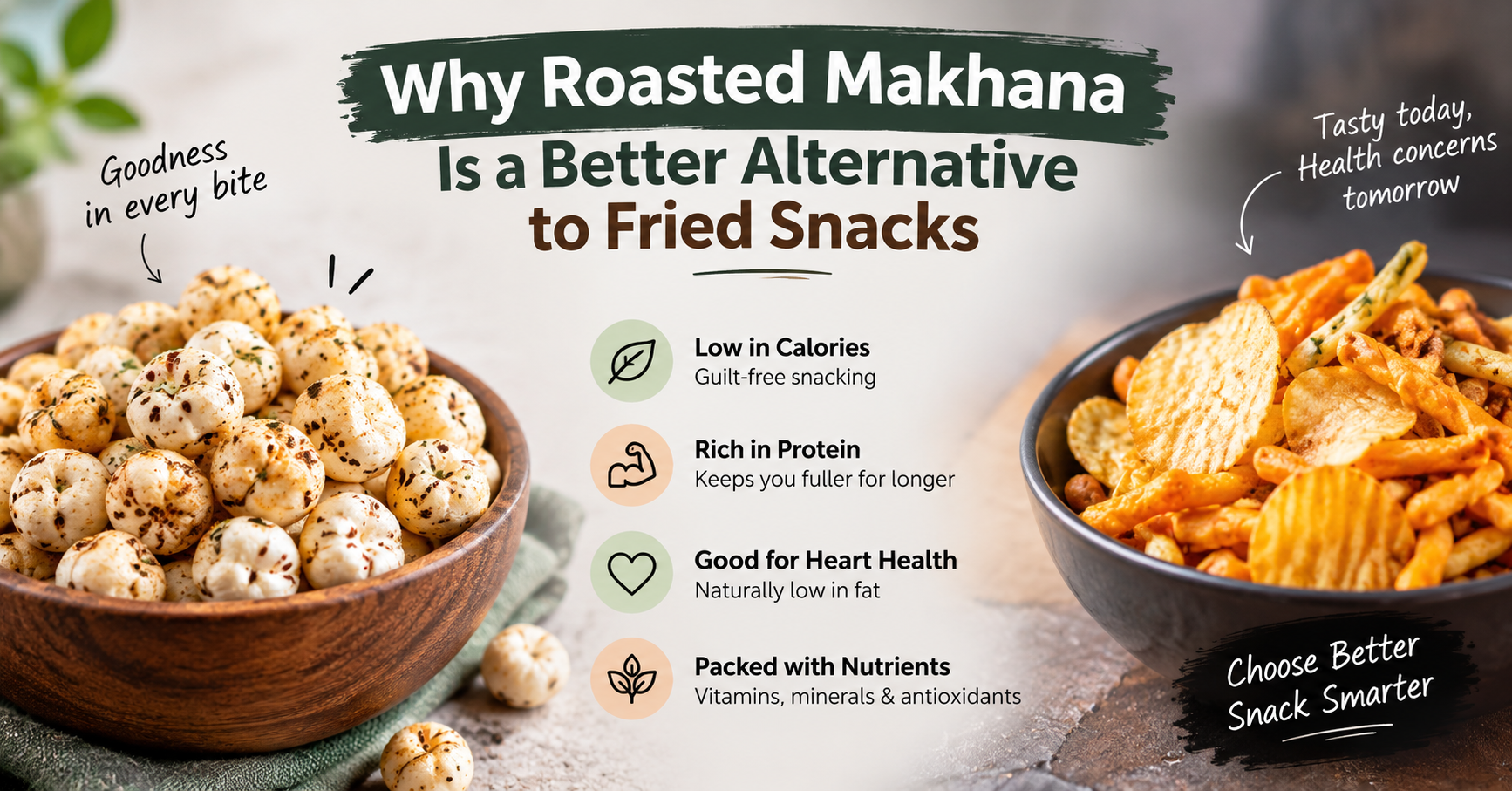
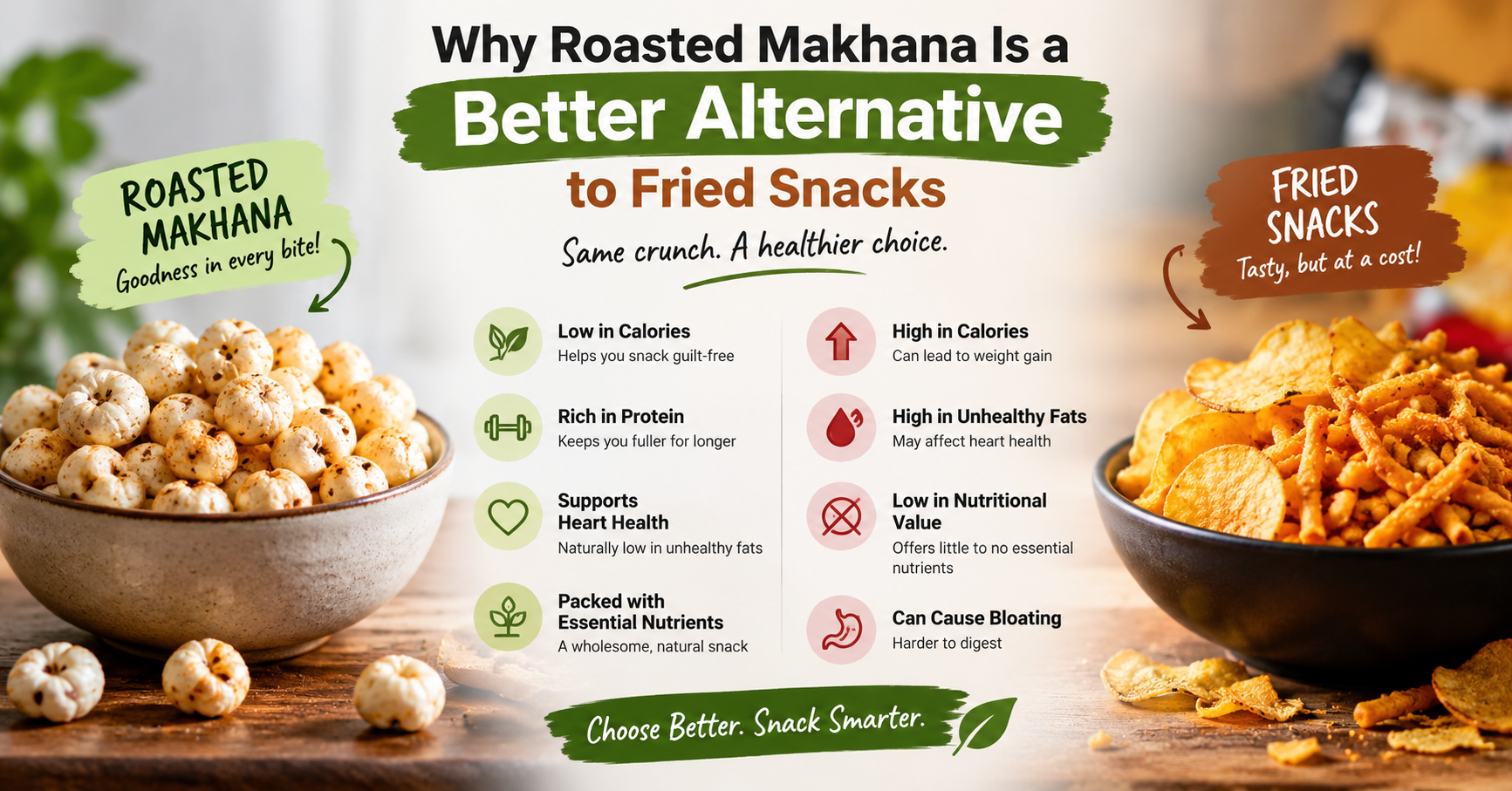
Because roasted makhana is light and crunchy, it can satisfy the desire for a crispy snack without requiring deep frying.
What Is Namkeen?
Namkeen is a broad category of Indian savoury snacks. It includes mixtures, sev, bhujia, dal, peanuts, fried lentils and many other combinations. These snacks are usually made with ingredients such as gram flour, lentils, potatoes, peanuts and spices.
The biggest concern with many packaged namkeen products is their preparation. Several varieties are deep-fried and can contain considerable amounts of oil, salt and calories. Some products may also contain added ingredients to improve taste, texture and shelf life.
Namkeen can certainly be enjoyed occasionally, but eating large portions every day may make it harder to maintain a balanced diet.
Makhana vs Namkeen: Nutrition Comparison
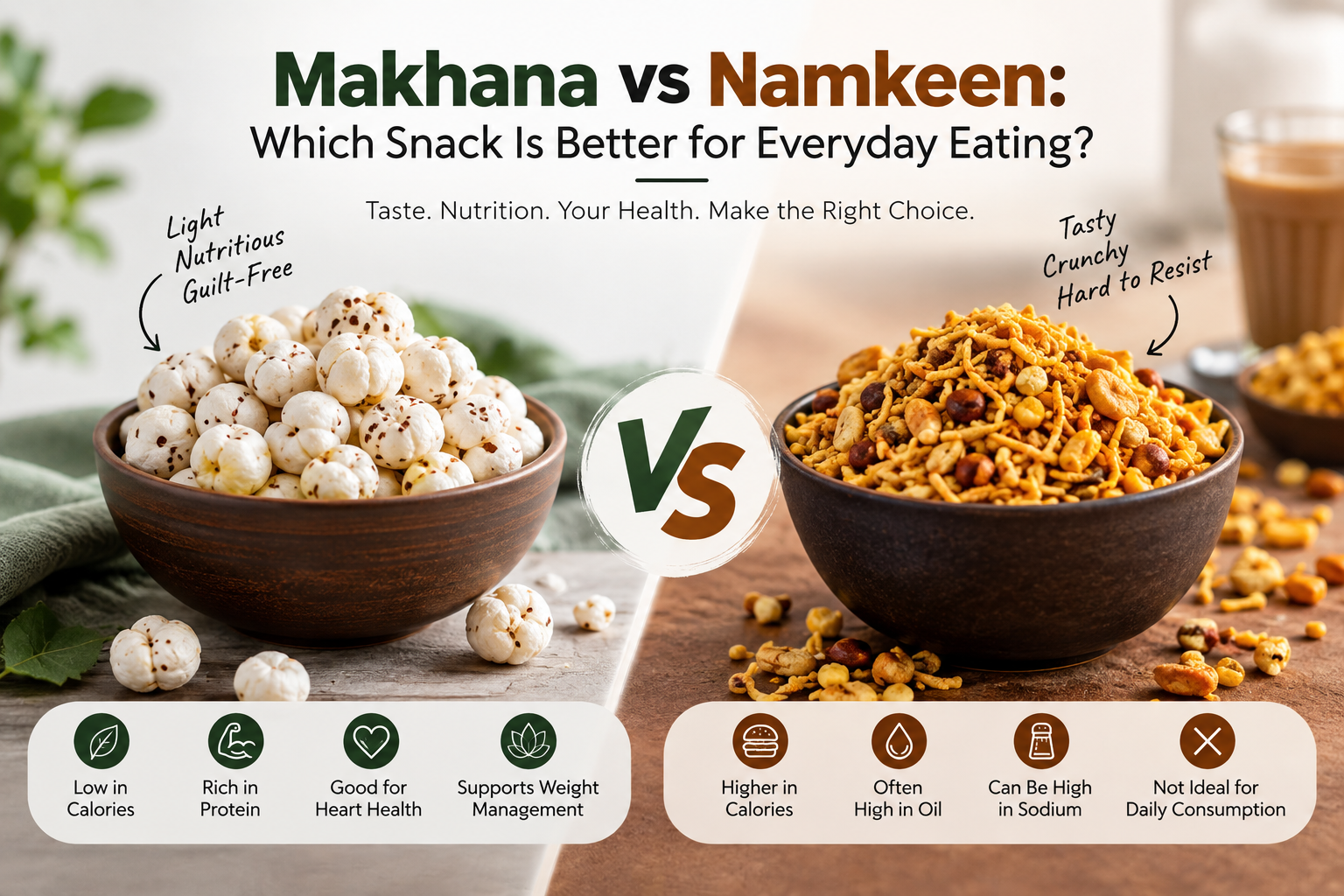
When comparing the two, the ingredients and cooking method matter a lot.
Makhana:
- Usually low in fat when dry roasted
- Provides dietary fibre
- Contains some plant-based protein
- Can be prepared with less salt
- Easy to combine with simple spices
Namkeen:
- Many varieties are deep-fried
- Often higher in fat
- Can be high in sodium
- Some varieties are calorie-dense
- Easy to overeat because of its salty and spicy taste
This does not mean every namkeen is unhealthy or every makhana product is automatically healthy. For example, makhana covered with lots of butter, oil, sugar or heavy seasoning can become much more calorie-dense.
Which Is Better for Weight Management?
If weight management is your goal, plain or lightly roasted makhana can be a better everyday choice than heavily fried namkeen.
The reason is simple: portion control and preparation matter. Fried namkeen can pack a lot of calories into a small serving, making it easy to eat more than intended.
Makhana is also quite light in texture. A bowl of roasted makhana can feel like a satisfying snack, especially when seasoned with herbs and spices instead of excessive oil and salt.
Still, calories matter. Eating very large quantities of makhana will also add significant calories to your daily diet.
What About Salt?
Salt is another important difference. Many packaged namkeen products have a strong salty taste, and frequent consumption can increase your overall sodium intake.
With makhana, you have much better control over the seasoning if you prepare it at home. You can use a small amount of salt along with black pepper, cumin, turmeric, chilli or other spices.
If you are buying packaged makhana, check the nutrition label and ingredient list rather than assuming that every flavoured makhana is equally healthy.
Which Snack Is Better for Everyday Eating?
For regular snacking, lightly roasted makhana is generally the better choice compared with deep-fried namkeen.
Makhana gives you a crunchy texture and can be prepared with simple ingredients. It also provides fibre and some protein while being naturally low in fat before cooking additions.
Namkeen, on the other hand, is better treated as an occasional snack, particularly fried mixtures containing lots of oil and salt.
That does not mean you need to completely stop eating namkeen. Food should also be enjoyable. Having a small serving occasionally can easily fit into a balanced eating pattern.
How to Make Makhana More Interesting
One reason people choose namkeen is because it has a strong flavour. You can make roasted makhana more enjoyable without loading it with unhealthy ingredients.
Try roasting makhana with a small amount of oil or ghee and adding:
- Black pepper and rock salt
- Roasted cumin powder
- Turmeric and chilli
- Chaat masala in moderation
- Dried herbs
- A little nutritional seasoning of your choice
For a homemade snack, avoid adding excessive butter, sugar or salt.
So, makhana vs namkeen—which snack wins for everyday eating?
For most people, plain or lightly roasted makhana is a better everyday snacking option than deep-fried namkeen. It can provide fibre, some protein and a satisfying crunch while allowing better control over oil and salt.
Namkeen can still have a place in your diet, but portion size matters. Instead of eating directly from a large packet, serve a small portion in a bowl and enjoy it slowly.
Ultimately, the healthiest snack is not just about choosing one food. Preparation, ingredients, portion size and frequency all matter. If you want a crunchy snack that can be included more regularly, roasted makhana is a smart option to consider.